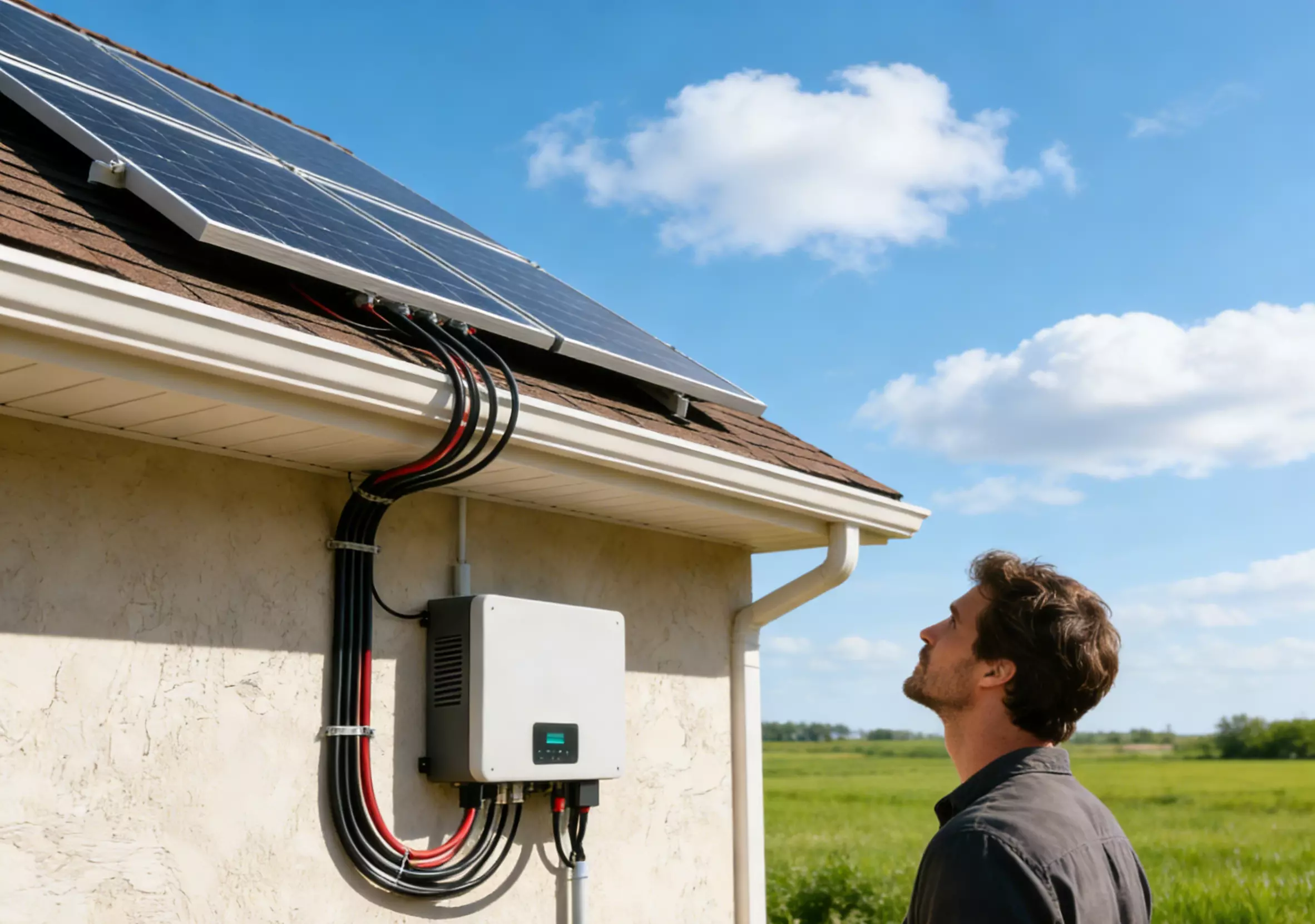
In the actual use of many home photovoltaic systems, a common but easily ignored problem is: The failure of power generation to meet expectations is not that the solar panels are not good enough, but that the inverter "drops the chain" at the critical moment.
The inverter is not a simple "current conversion box", but the control centre of the whole system. It has decided:
- Can solar energy be utilised efficiently?
- Is the system stable under high temperature, shadow and power grid fluctuations?
- Can batteries and energy storage be upgraded smoothly in the later stage?
- Maintenance costs and usage experience in a ten-year or even longer cycle

For this reason, when choosing a solar system in 2026, the importance of the inverter brand is often no less than or even higher than the solar panel itself.
Based on the industry evaluation logic, real installation feedback and different application scenarios, this article will systematically analyse the best solar inverter brands worth paying attention to in 2026 to help home users make more rational long-term choices.
I. Why does "inverter brand" determine the success or failure of the system more than solar panels?
In photovoltaic systems, solar panels are responsible for "generating electricity", while inverters are responsible for "making electricity useable". Common problems in reality include:
- With the same component configuration and different inverter brands, the annual power generation gap can reach 5%-15%.
- Some low-end inverters operate frequently in high-temperature or unstable power grid areas.
- Later, I wanted to install a battery, but I found that the original inverter was not supported or the compatibility was poor.
This is also why more and more installers and users have shifted their focus from "component power" when selecting models: The stability, efficiency curve, intelligent management ability and long-term brand support ability of the inverter. In other words, choosing an inverter in 2026 is no longer just "buying a device", but choosing a long-term energy management plan.
II. Expert evaluation criteria: What kind of inverter brand is "worth buying"?
When evaluating top solar inverter brands, professional institutions and installers usually judge from the following dimensions:
- Conversion efficiency and MPPT performance: High-efficiency inverters not only pay attention to peak efficiency, but also pay more attention to their performance under real working conditions such as low light and partial occlusion.
- Network-online / off-network / hybrid system adaptability: Excellent brands usually have a complete product line, which can cover the hybrid scenarios of connecting to the network, off the network and energy storage, rather than a single model.
- Long-term stability and operating records: Is there a large-scale installation case? Has it been verified by the market for many years?
- Software monitoring and intelligent management: Does it support remote monitoring, APP management, energy consumption analysis, and even intelligent scheduling?
- Quality assurance and service network: 10-12-year warranty and clear regional after-sales support are often more important than parameters.
Truly excellent reliable solar inverter brands can usually provide mature solutions in multiple application scenarios, rather than only performing prominently in a certain market segment.
III. The brand pattern of solar inverters worthy of attention in 2026
Enphase Energy
Positioning: Micro-inverter representative. Enphase is famous for its veneer-level micro-inverters. Each component can run independently and carry out MPPT tracking, which is very suitable for multi-slope and complex roof environments.
Advantages: module-level optimisation, high system redundancy. Suitable for: home users with complex roofs and high requirements for monitoring fineness. User feedback: The scores of many IQ series on the SolarReviews platform have been maintained at a high level for a long time.
Fronius
Positioning: high-end group string inverter. Fronius from Austria emphasises stability and service system, and its PRIMO/SYMO series is widely used in residential and small commercial systems.
Advantages: multi-way MPPT, mature installation ecology. Suitable for: standard network-line residential, small commercial systems.
SMA
Positioning: German old brand with high reliability. SMA is famous for its long-term stable operation, especially in high temperature and complex environments. It is a common choice for many high-end projects.
Advantages: high reliability and perfect global service network. Suitable for: users with extremely high requirements for system stability.
SolarEdge
Positioning: Optimised inverter leader. SolarEdge realises component-level optimisation and system-level centralised management through the architecture of "power optimiser + inverter", which has obvious advantages in large roofs and complex series systems.
IV. How to choose the inverter brand under different application scenarios?
Scenario 1: Home Grid-connected Solar System (3–6kW)
Most home roof systems are concentrated in the 3–6kW power segment, and the core requirements are: Stable networking, High daily power generation efficiency, Quiet operation and simple maintenance. This kind of scenario is more suitable for group string network-based inverters.
Example of scenario scheme: Huijue Group 3kW–6kW Household Grid-tie Solar Inverter. While meeting the needs of family networking, this power segment product takes into account efficiency and system stability, which is suitable for long-term use in ordinary residences.
Scenario 2: Off-network housing / farm / emergency standby
In areas where there is no stabilised power grid, the inverter is not only responsible for converting electricity, but also the "electricity brain" of the system. Users pay more attention to: Can it drive high-power loads such as refrigerators and water pumps? Compatibility with lithium batteries or lead-acid batteries; the stability of continuous operation for a long time.
Example of scenario scheme: Huijue Group 8kW–11kW Single-Phase Off-Grid Solar Inverter. Compared with low-power models, high-power off-grid inverters are more stable under load impact and are suitable for areas where the grid is completely off-grid or unstable.
Scenario 3: Grid-online + energy storage + standby power (mainstream trend in 2026)
With the rise in electricity prices and the increase in the risk of power outages, more and more families choose hybrid inverters: Use solar energy during the day, Battery for night use, Power outage automatically switch to standby power.
Example of scenario scheme: Huijue Group 10–12kW Three-Phase Hybrid Grid Energy Storage Inverter. This kind of best hybrid inverter scheme is especially suitable for villas or small commercial users with high requirements for energy independence.
V. Brand vs Scene Comparison Table (Quick Decision-making)
| Usage Scenario | Recommended Inverter Type | Representative Brands/Solutions |
|---|---|---|
| Grid-tied Residential | 3–6 kW String Grid-tied | SMA / Huawei |
| Fully Off-grid | 8–11 kW Off-grid | Growatt |
| Grid-tied + Storage | Three-phase Hybrid | GoodWe / SolarEdge |
VI. 3 key points that many people ignore
- Whether to support the installation of batteries in the future
- Whether the after-sales and technical support are clear and accessible
- Whether the product line is complete, not a single model
In the long run, the system upgrade cost is lower for brands with complete network-to-network, off-network and hybrid solutions.
VII. FAQ: Frequently asked questions about inverter brands
Q: Which brand is the most suitable for home use?
A: There is no absolute "best", only the most suitable scheme for the scene.
Q: What is the difference between off-grid and hybrid inverters?
A: Hybrid inverters can be connected to the power grid and the battery at the same time, which is more flexible.
Q: Are domestic inverters reliable?
A: Under the global installed capacity and market verification, many domestic brands have mature reliability.
VIII. Select inverters in 2026, the brand is only the starting point.
The price, brand and performance of inverters have never existed in isolation. A truly rational choice should be based on: Usage scenarios, Power demand, Whether to plan energy storage, Long-term operation and maintenance and upgrade space.
Choose the right brand + choose the right model to have a stable power generation for more than 10 years.
If you need to get the inverter plan and system budget evaluation suitable for your family, welcome to contact a professional consultant.