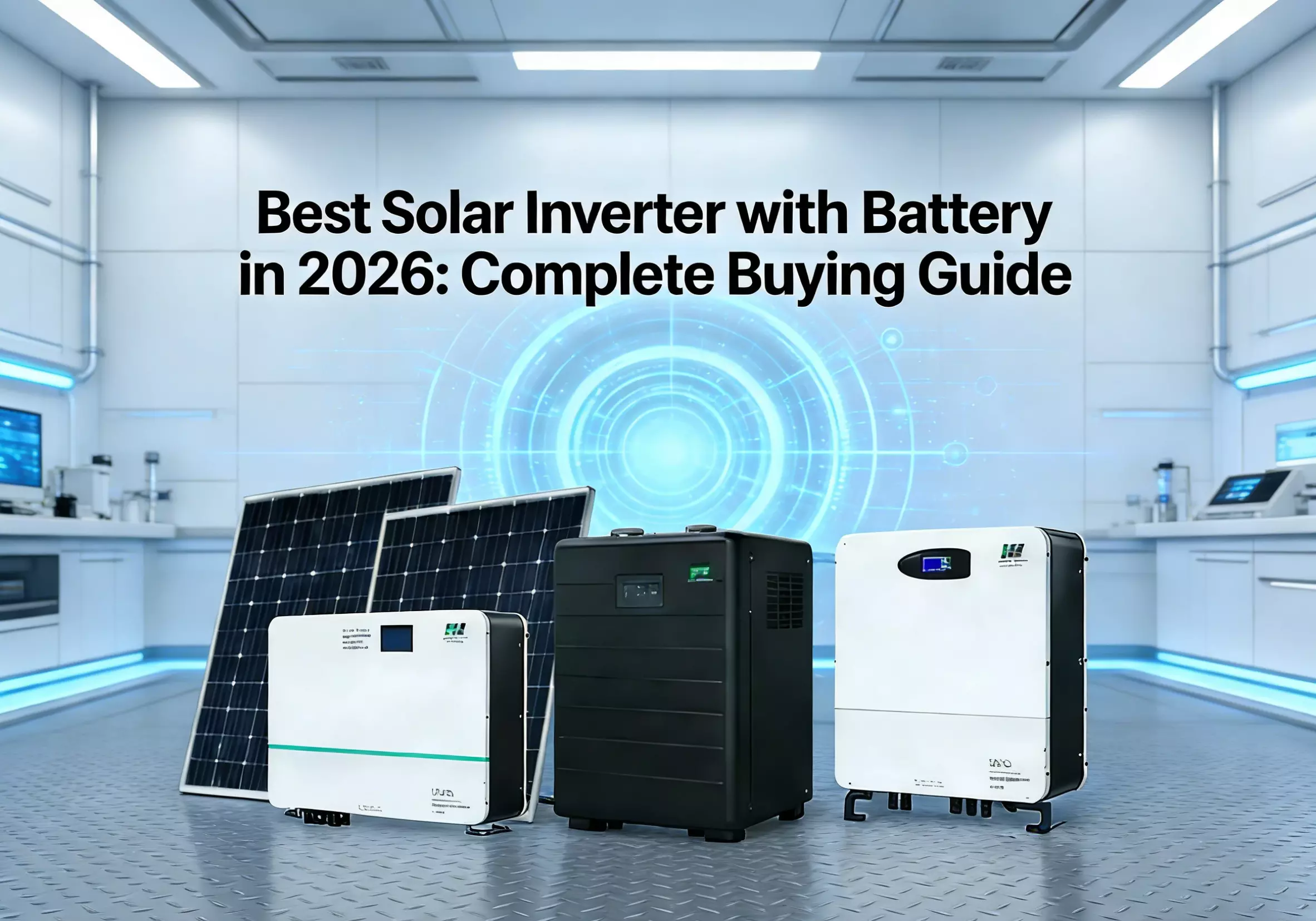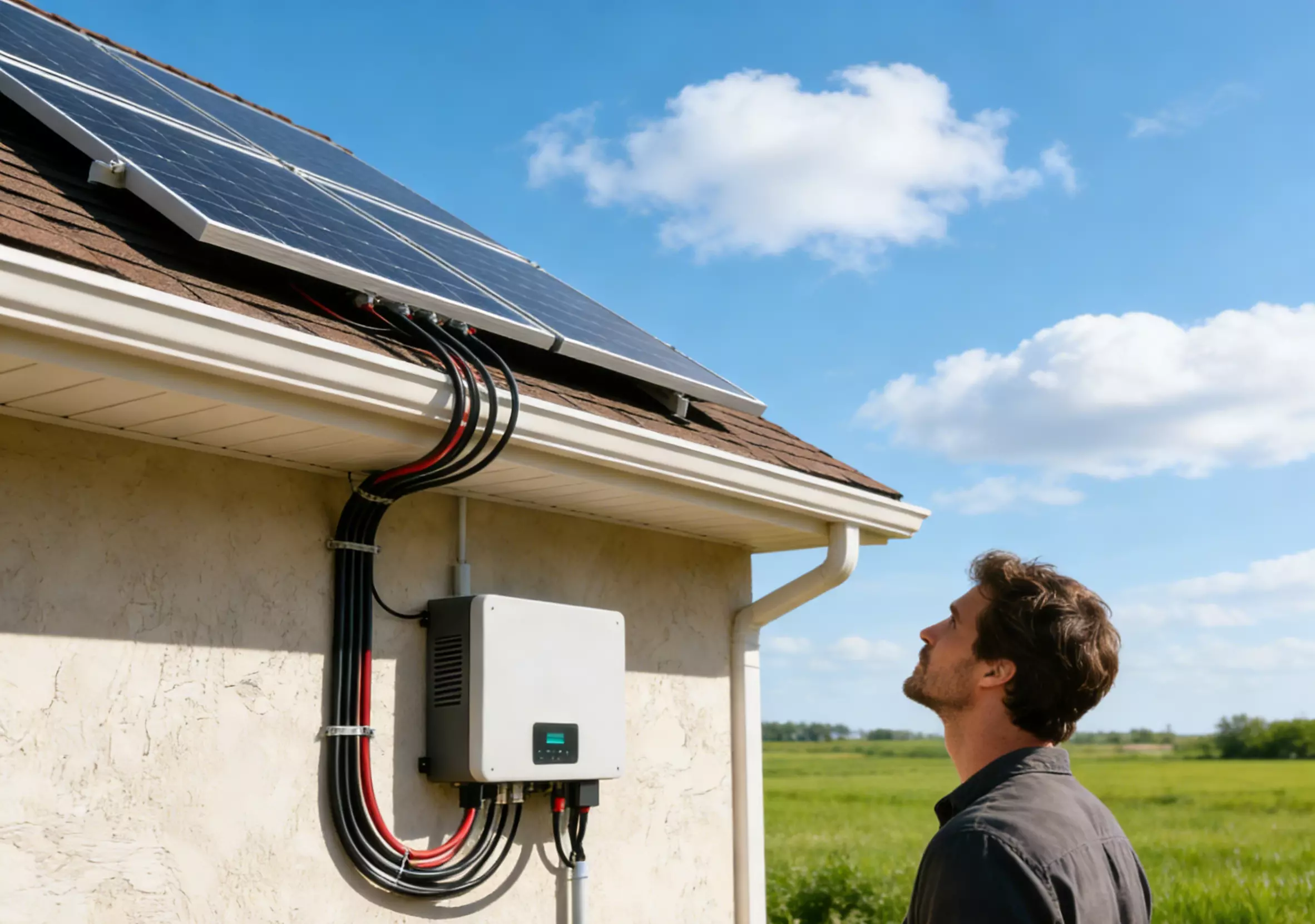
"How much does a solar inverter cost? Why is it so expensive in the system?"
In fact, in the whole solar system, although the inverter is not the most expensive component, it is the link with the largest price fluctuation and the most complex configuration difference.
Choosing the wrong inverter may not only cost more money, but also limit your ability to upgrade your system in the next few years.
This Solar Inverter Price Guide 2026 will answer the following questions systematically:
- What is the mainstream price range of solar inverters in 2026?
- Why is the difference in solar inverter price so big?
- What factors really determine the cost of PV inverter?
- How to choose the "most suitable" instead of "the cheapest" within the budget?
I. Why is the price of inverter a key component of system cost?
In a complete solar system, the cost usually consists of the following parts:
- Photovoltaic modules (Panels)
- Inverter (Inverter)
- Brackets, cables and other auxiliary materials
- Installation and commissioning costs
- (Optional) Battery energy storage system
Among them, the price of solar inverters usually accounts for 10%-20% of the overall system cost.
This proportion does not seem high, but it directly affects:
- Power generation efficiency
- Does it support energy storage?
- Can the power be supplied in the time of a power outage?
- System life and expansion space
This is also why, "If the inverter is expensive, it is not necessarily worth it, and if it is cheap, it is often more expensive".
II. The average price range of solar inverters in 2026 (divided by type)
Before discussing how much does a solar inverter cost, we must first distinguish the types of inverters.
| Inverter Type | Typical Price Range (USD) | Primary Use |
|---|---|---|
| Grid-tie | $800 – 2,000 | Rooftop grid-tied PV systems for homes |
| Hybrid / battery inverter | 1,500 – 4,000 | Storage + grid-tied + UPS backup |
| String (high power) | 2,000 – 8,000 | Commercial / large systems |
| Micro | 100 – 300 per unit | Multi-angle roofs, shaded environments |
Attention: The above is the price of the equipment itself, excluding the cost of installation and auxiliary materials. The specific solar inverter pricing will change significantly with the power, the quantity of MPPT and the brand.
III. Five key factors affecting the price of solar inverters
Compared with many articles that only give "price list", this part is the core of the true understanding of the solar inverter budget.
3.1 Power level (kW)
The price of the inverter is almost linearly related to the power: 3 kW ($800–$1,200), 5 kW ($1,200–$2,000), 10 kW ($2,000–$3,500). But there is a counterintuitive phenomenon: The larger the system, the lower the unit power cost. This is also why commercial systems are more advantageous in kW cost.
3.2 MPPT channel number and intelligent function
The more MPPT, it means more complex circuit design and stronger shadow and multi-oriented adaptability. At the same time, the price of inverters with the following functions will also increase significantly: Intelligent Energy Management (EMS), Dynamic power scheduling, and AI power generation optimisation algorithm. This is also one of the main sources of high-end PV inverter cost.
3.3 Brand and warranty period
In the inverter market, the brand difference is very obvious. High-end brands have higher prices but usually provide a 10-12-year warranty. Mid-end/emerging brands are cost-effective with a warranty of 5–10 years. For home users, after-sales service and quality assurance are often more important than "a few hundred dollars cheaper".
3.4 Communication and remote monitoring capabilities
In 2026, the following functions are almost standard: Built-in Wi-Fi / LAN, Mobile Phone App Real-Time Monitoring, and Cloud data analysis. However, in low-cost inverters, these functions may still be "optional", thus increasing the final solar inverter price.
3.5 Whether to support energy storage and UPS
Whether to support batteries is a watershed in price. Grid-only inverters have the lowest cost, while inverters that support battery connecter + UPS / EPS will see the price rise significantly. If you have an energy storage plan in the future, choosing an inverter that supports the battery at the beginning is more economical.
IV. Inverter price trend and market forecast in 2026
Trend 1: The overall price tends to stabilise and slowly decline. The reasons include technical maturity, large-scale production, and a stable global supply chain. But the downward space is not as obvious as in previous years.
Trend 2: Intelligent functions become the new stratification of price. The price difference between basic inverters and "intelligent inverters" is widening. Users no longer only pay for hardware, but also for software capabilities.
Trend 3: The demand for hybrid inverters continues to grow. With the increase of power outage risk and electricity price fluctuations, inverters with energy storage capacity are becoming the first choice for families.
V. How to estimate your inverter budget?
Step 1: Determine the scale of the system. Home system (3–10 kW) or Commercial system (10–50 kW and above).
Step 2: Select the type of inverter. Grid-only or hybrid inverter.
Step 3: Refer to the price range. 5 kW Grid-tied ($1,200–$1,800) or 5 kW hybrid ($2,000–$3,500).
Step 4: Add the cost of installation and accessories. Simple budget formula: Total budget ≈ Inverter equipment cost × (1.1–1.2).
VI. Tips for saving money on solar inverters in 2026
"Buying the right one" is more important than "buying cheap".
- Skill 1: Power matches the real electricity demand. Excessive power = spending more for nothing.
- Tip 2: Prioritise expandable models. Avoid doubling the cost of upgrading in the future.
- Skill 3: Look at the cost of the whole life cycle. Quality assurance and after-sales service determine long-term expenditure.
- Skill 4: Pay attention to channels and collect prices. The inverter price list varies significantly from channel to channel.
- Tip 5: Be cautious about second-hand/refurbished equipment. The price is low but the risk is high.
VII. How does the price change in different scenarios?
Home 5 kW roofing system: Grid-tied inverter ($1,200–$1,800) or Hybrid inverter ($2,000–$3,000).
Commercial 20 kW system: String network-based inverter ($4,000–$7,000) or Hybrid high-power inverter ($6,000–$9,000).
Off-grid/backup power supply system: Inverter + battery complete set ($2,500–$5,000 depending on energy storage scale).
VIII. Common misunderstandings and FAQs
Q1: Is the inverter the most expensive in the system? No, the panel and battery are usually more expensive, but the inverter determines whether the system is "easy to use".
Q2: Is the cheap inverter really cost-effective? Saving money in the short term may limit the efficiency and expansion of power generation in the long run.
Q3: How much does a 5 kW inverter usually cost? $1,200–$3,000, depending on whether energy storage is supported.
Q4: Does the price of the inverter include installation? It is usually not included and needs to be calculated separately.
IX. How much is the inverter? It depends on what you want.
Solar inverter price is never an isolated number. It depends on the power, function, usage scenario, future planning, and your expectations of energy independence. Understand the logic behind the price, only then can we make truly rational investment decisions in 2026.
If you want to get a more accurate system budget, or want to know which type of inverter is the most suitable for your home electrical structure, contacting a professional consultant for systematic evaluation is often more economical than guessing the price by yourself.