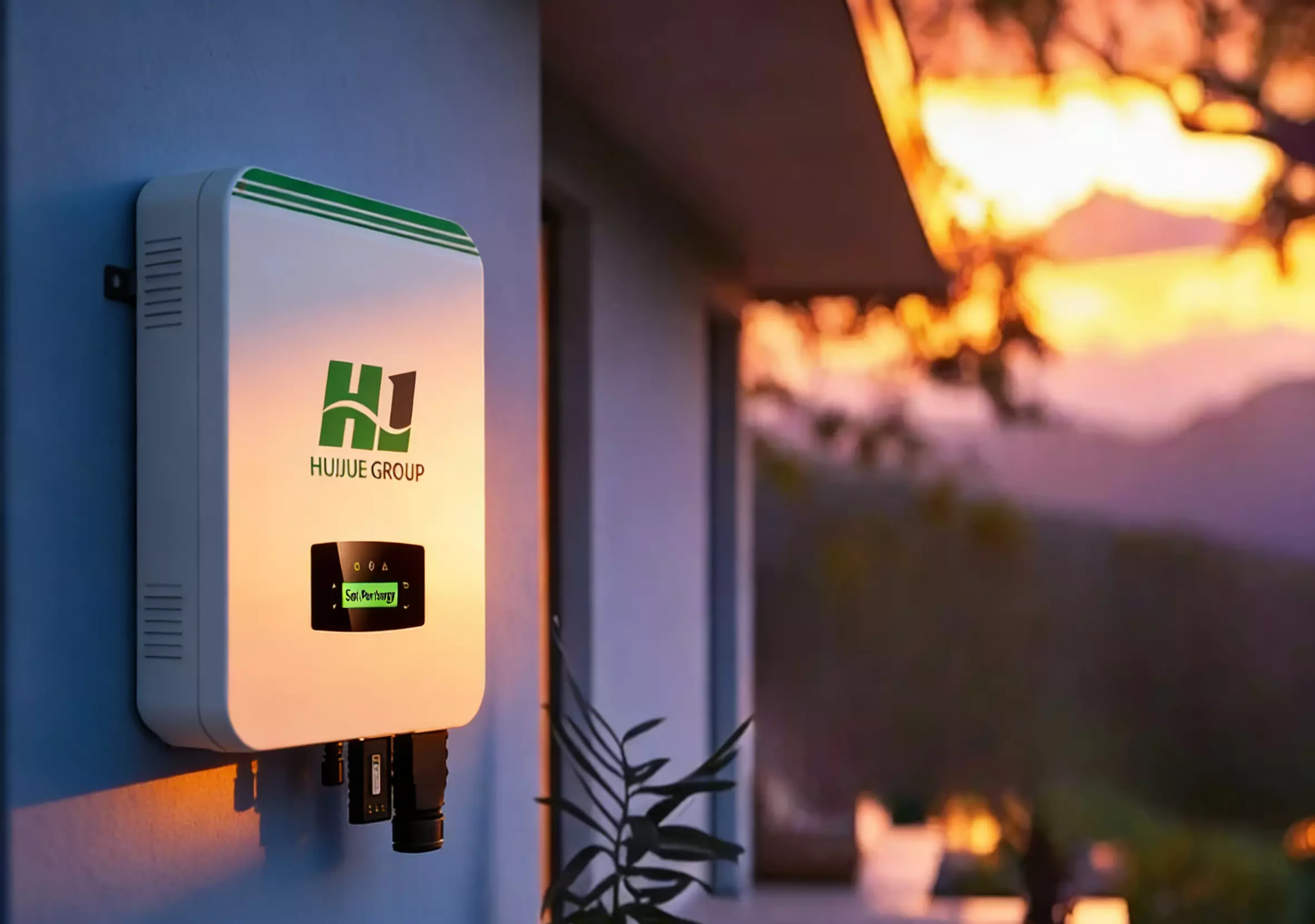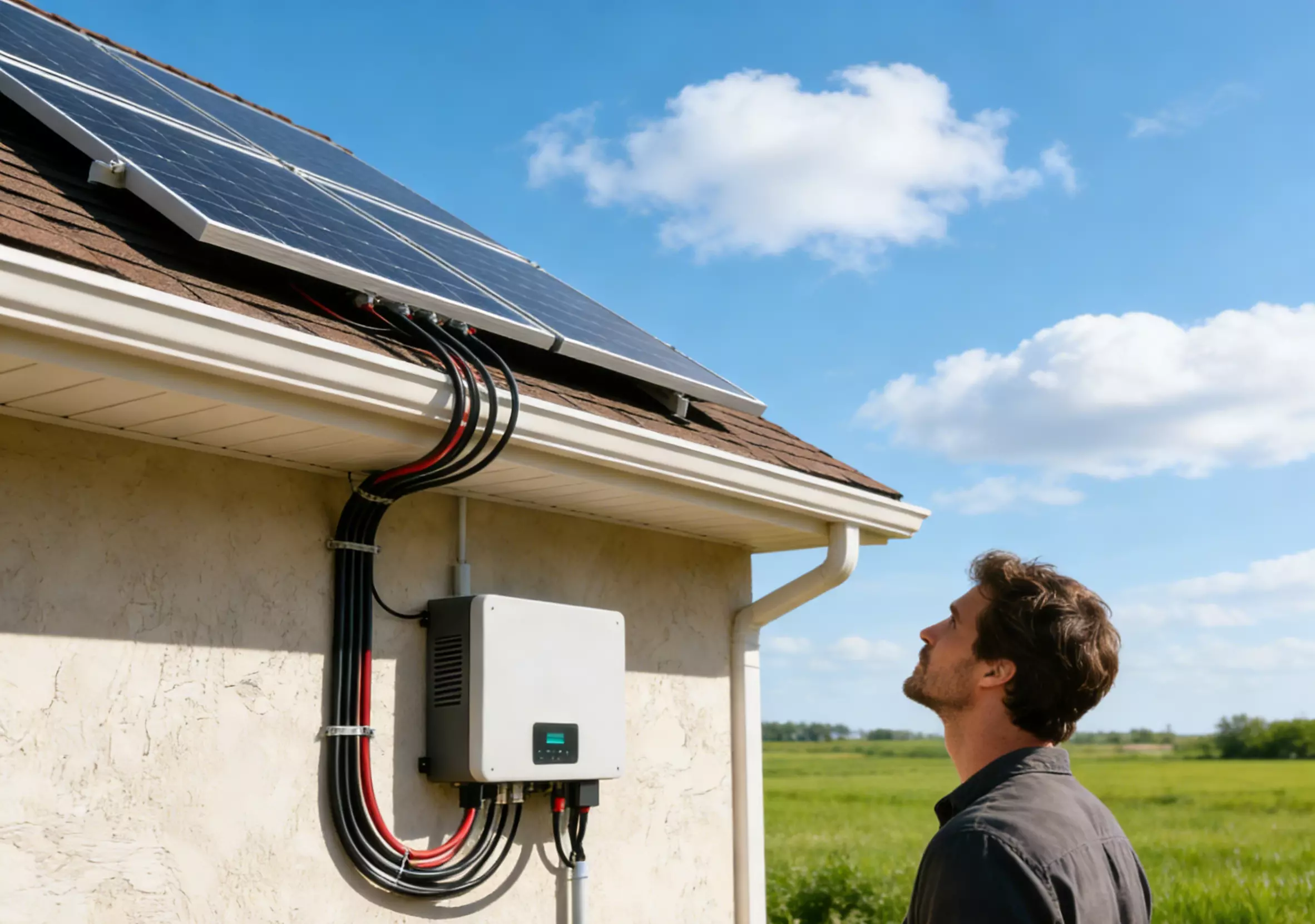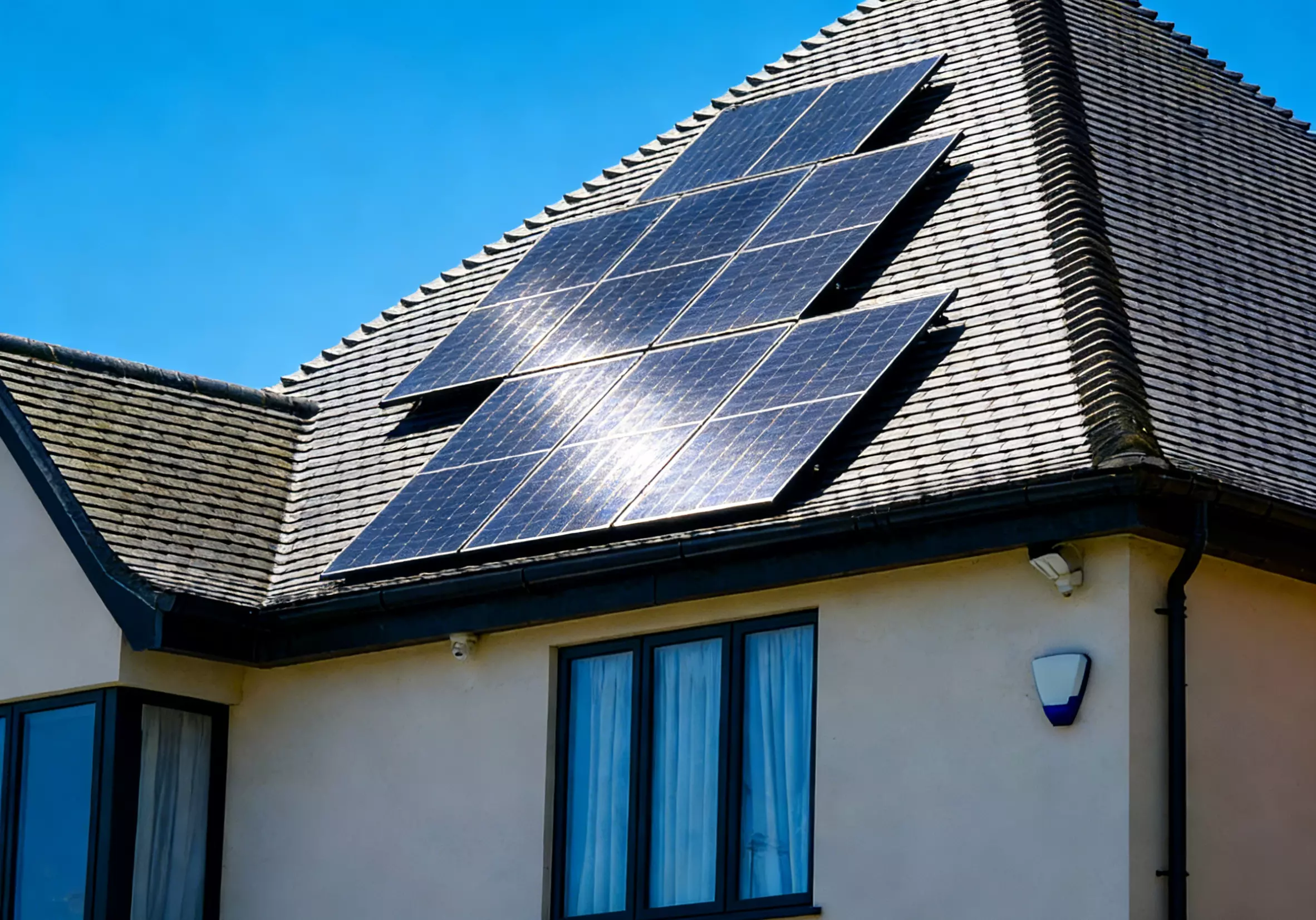
When it comes to solar systems, the first thing that comes to mind is the rows of solar panels on the roof. Indeed, the battery panel is responsible for collecting sunlight, which is an indispensable core component of the system. But solar inverters also play a crucial role in the whole power generation process. It is it that converts the direct current generated by solar panels into alternating current that can be directly used by homes and buildings to ensure the efficient, stable and intelligent operation of the system. For families and businesses that are seeking sustainable energy solutions around the world, inverters are no less important than the panels themselves.
Solar inverter with battery is not only the brain of the system, but also the dispatch center of the entire energy system. This article will help you comprehensively understand how to choose the most suitable solar inverter for your home.
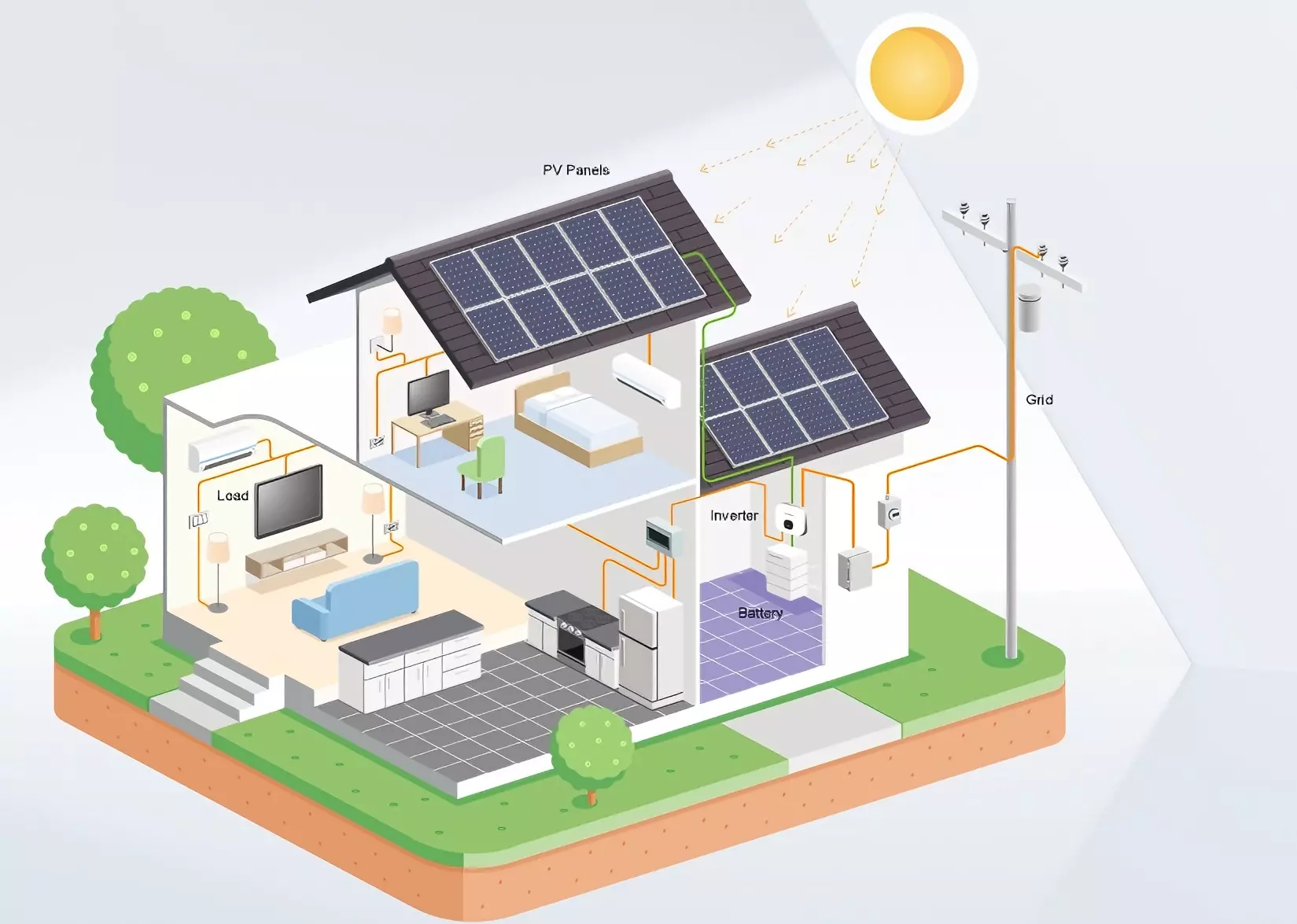
I. Why is the combination of "solar energy + battery + inverter" becoming more and more popular?
In recent years, the global power environment has undergone obvious changes:
- The power grid is unstable and the frequency of power outages is increasing.
Extreme weather and aging power grids have increased the number of power outages in many countries. For example, EIA data in the United States shows that the average household power outage time in 2023 is more than 5.5 hours. This means that home users need more and more backup power. - Electricity prices have risen, and energy costs have risen for a long time.
In the past 10 years, global electricity prices have risen by more than 20%-40%. - Families want to have "energy autonomy".
It can not only generate electricity during the day, but also hope that electricity can be used at night, on rainy days and during power outages.
And all of this is inseparable from a core device--
Solar inverter with battery
It is responsible for the intelligent scheduling of the three sources of solar energy, power grid and battery, so that your home can have electricity at any time.
II. What is a solar inverter with battery? What's the difference between it and the traditional inverter?
Many people will mix "hybrid inverter", off-grid inverter and hybrid inverter.
The following is the simplest way to explain:
- Ordinary Grid-tie Inverter
Just do one thing: Convert solar DC into AC and send it to the power grid or home.
Disadvantages:- No power at night
- Can't work when the power is out
- Battery is not supported
- Off-grid Inverter
Specially designed for areas without power grids:- Solar power generation during the day
- Charge the battery with excess power
- Household appliances are powered by inverters
Disadvantages:
- Unable to connect to the network
- Single path, suitable for remote areas
- Hybrid Solar Inverter with Battery
That is the key point of this article: It can manage the energy flow of solar energy, battery and power grid at the same time, which is the most intelligent home-level solution.- Direct use for power generation during the day
- The excess electricity is stored in the battery
- Electricity at night comes from the battery
- Automatically switch to home backup power supply in the time of power outage
- Use the battery when the electricity is expensive at the peak, and automatically charge when the electricity is cheap at the low point.
You can also understand it as: "Transformer + electricity butler + energy storage dispatch center + home backup power supply" four-in-one equipment.
This is also why solar inverter with battery is considered the standard configuration of future home energy systems.
III. How to evaluate your home's electricity consumption and energy storage needs? (Practical steps)
Choose a power inverter and a large battery, depending on the actual situation of your home. The following is the most practical way.
- Daily electricity consumption estimate (kWh/day)
The simplest way:- Check the "average monthly electricity consumption" in the electricity bill of the previous quarter.
If your daily power is 10–20 kWh, you usually need:
- Inverter: 5–8kW
- Battery: 5–15 kWh
- Solar panels: 5–10 kW
- Peak Load (Peak Load)
See what high-power electrical appliances are available at home:Appliance Power Air-conditioner 800 – 2,000 W Electric water heater 1,500 – 3,000 W Electric oven 1,500 – 2,500 W Refrigerator 80 – 200 W (higher at start-up) If there are many devices running at the same time, the inverter needs to be selected with greater power.
- Do you need to reserve it in time of power outage?
If it needs to be maintained during a power outage:- Refrigerator
- Internet
- Illuminate
- Small household appliances
The battery capacity should start from at least 5kWh.
If you want the air conditioner or water pump to work, it should be more than 10–15 kWh. - Installation space, budget, future capacity expansion needs
It is recommended to plan in advance:- Do you want to expand the battery capacity in the future?
- Will the number of solar panels increase?
- Will electric vehicle charging piles be added in the future?
If you have a capacity expansion plan in the future, it is recommended to choose a battery ready solar inverter that supports parallel machine and expansion.
IV. What are the key components of the battery system? How to choose?
The following is the most important component selection guide:
- Inverter (core)
When choosing solar inverter with battery, you must pay attention to:Parameter Specification Rated Power Common: 3 kW / 5 kW / 8 kW / 10 kW Peak Efficiency ≥ 97 % recommended Battery Types Supported LiFePO₄ – safest & longest life MPPT Trackers Multiple MPPTs suit complex roofs Parallel Capability Essential for future expansion UPS Switch-over Time < 20 ms ideal Communication Protocol Must be compatible with battery BMS - Battery (energy storage core)
Key parameters:- Battery type: LiFePO4 (preferred)
- Capacity: 5–20 kWh
- Deep discharge DoD ≥ 90%
- Cycle life ≥ 6000 times
- Whether to support communication with inverters (compatible with BMS)
- Solar panel / photovoltaic array
Match with inverter DC input (DC:AC ratio 1.1–1.3 is better)
Avoid covering
Consider the direction and inclination
Whether to reserve capacity expansion in the future - Install the system
Including:- Circuit breaker
- Isolation switch
- Lightning protection
- Cable diameter configuration
- Heat dissipation and ventilation environment
Make sure that it is completed by a professional installation team.
V. Recommended configuration of common home application scenarios
The following are 4 typical system schemes for different user needs:
- Scheme 1: Home basic optical storage system (suitable for most families)
Inverter: 5kW hybrid solar inverter
Battery: 5–10 kWh
Photovoltaic power: 4–6 kW
Applicable to:- Power supply during the day + electricity at night
- Occasional power outages
- Reduce the electricity bill
- Plan 2: Emergency standby system (focus on ensuring key equipment)
Inverter: 3–5 kW
Battery: 5–8 kWh
Photovoltaic: 2–4 kW
Applicable to:- Areas with frequent power outages
- Focus on ensuring refrigerators, lighting, network and other equipment
- Scheme 3: Off-network housing / cottage
Inverter: 5–8 kW off-grid inverter
Battery: 10–20 kWh
Photovoltaic: 6–10 kW
Applicable to:- Farms, mountainous areas, holiday villas and other non-grid areas
- Scheme 4: Hybrid Grid + Energy Storage System (Fenggu Electricity Price Optimization)
Inverter: 5kW–10kW
Battery: 10–20 kWh
Photovoltaic: 6–12 kW
Advantages:- Peak use of electricity → use of batteries
- Low electricity prices → Make up energy from the power grid
- Maximize the saving of electricity bills
Click to learn more about our inverter solutions.
VI. Advantages and limitations of solar systems with batteries
Advantage
- Truly realize energy autonomy
It can supply power independently and does not depend on the power grid. - Save up to 40–70% of electricity bills
(It depends on the regional electricity price and the scale of the system) - Store excess electricity during the day and use it at night.
Improve the spontaneous self-use rate. - Automatically provide backup power supply in the event of power outage
The key load of the home is constantly charged. - The system is flexible and expandable
More batteries, solar panels or inverters can be added in the future.
Limits / Points of Attention
- The initial investment is relatively high.
Including inverters, batteries, solar panels and installation costs. - High compatibility requirements for inverters and batteries
The battery model compatible with BMS must be selected. - It must be installed by a professional team.
It involves wiring, power calculation, safety protection, etc. - Need to monitor and maintain
Such as heat dissipation, dustproof, battery health testing, etc.
VII. Guide to purchasing and installing pit avoidance
- When choosing an inverter, you should pay attention to:
Efficiency is at least 97%
Whether it is compatible with LiFePO4 batteries
Whether to support parallel machine
Is there any APP remote monitoring?
Is the UPS switching speed fast enough? - The battery selection depends on:
The cycle life is at least 6,000 times
DoD≥90%
Is BMS compatible with inverters? - Pay attention to the installation:
The inverter should be installed in a well-ventilated area.
Avoid a humid environment
The line should meet the electrical specifications.
All kinds of protective devices must be installed in place.
VIII. Solar inverter with battery is the core equipment for future home energy upgrading.
For users who want to reduce electricity bills, reduce dependence on the power grid, and improve home security:
Solar inverter with battery is the most investment-worthy home energy system at present.
It can help you:
- Realize self-generation during the day
- Use energy storage electricity at night
- The power outage is still continuous.
- Significantly reduce energy costs
- Improve the energy level and value of housing
As a company deeply involved in solar inverters and energy storage solutions, Huijue Group provides stable, efficient, and intelligent solar inverter with battery solutions. It is very suitable for home residences, small businesses, off-network systems and backup power applications.
If you are planning a home solar energy + energy storage system, welcome to contact us at any time to get professional plans and quotations.