Sodium-Ion Batteries: The Next Big Thing in Solar Storage?
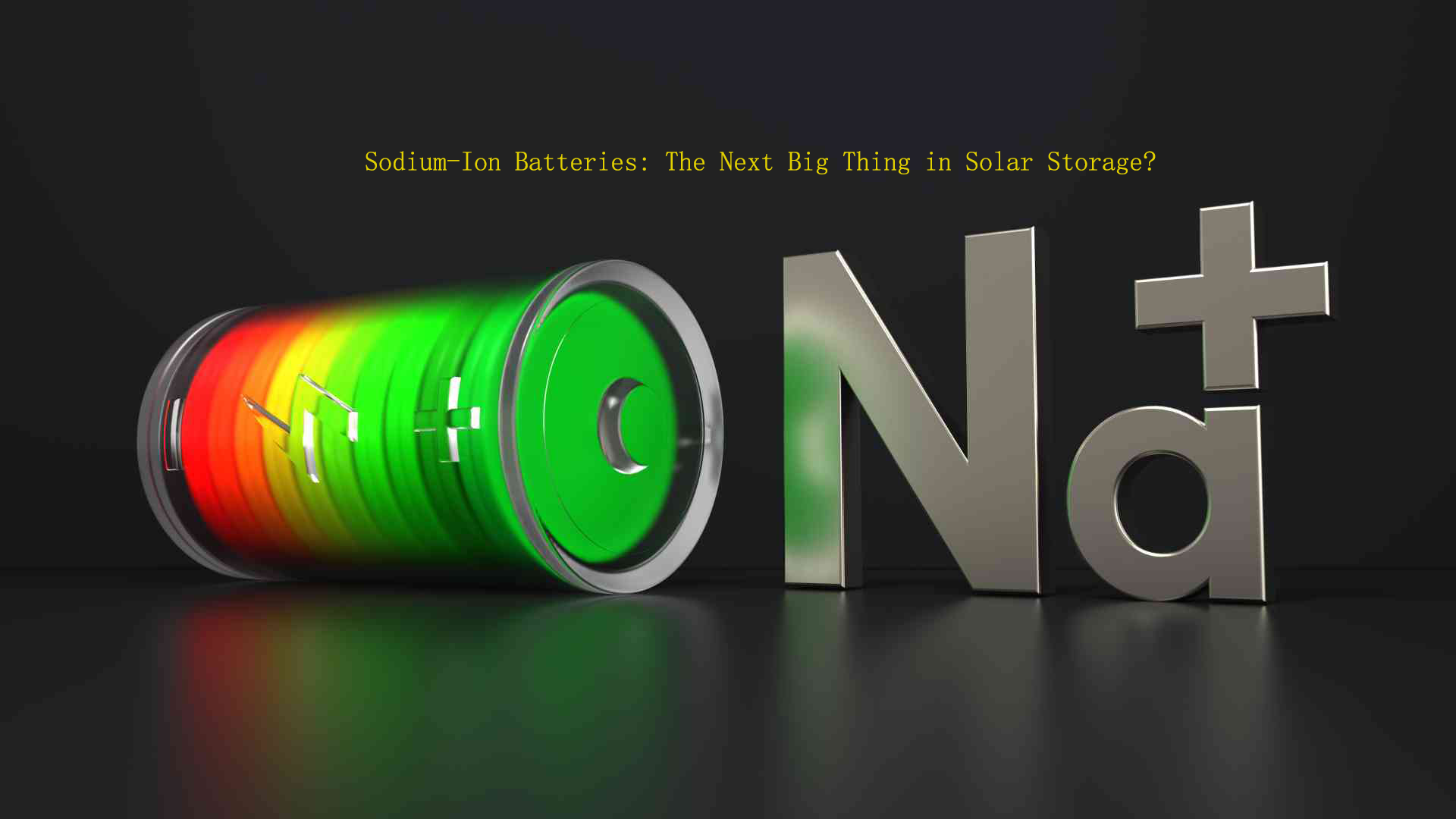
Nowadays, with an increasing demand for renewable energy solutions, sodium-ion batteries, as a potential alternative to lithium-ion batteries, are also attracting more and more attention. Sodium ion batteries have tremendous advantages in terms of cost, safety, and sustainability, especially in commercial and industrial applications, which may completely change the way solar energy is stored.
Understanding Sodium-Ion Battery Technology
Sodium-ion batteries function similarly to lithium-ion batteries but through charge-carrying sodium ion transfer. Sodium is more abundant and more widely distributed on Earth than lithium, and hence, sodium-ion batteries are inexpensive and, at the same time, environmentally friendly for large-scale energy storage. Apart from this, materials and design development have improved their performance, which has made sodium ion batteries increasingly viable in a wide range of applications.
Advantages of Sodium-Ion Batteries for Solar Storage
- Cost effectiveness
Sodium ion batteries are 20-30% cheaper than lithium iron phosphate (LFP) batteries, mainly because sodium is abundant, the cost is low, and aluminum, instead of copper, can be used as the current collector. Such a cost advantage is particularly important to commercial and industrial markets because both of them attempt to get the most out of energy storage investments.
- Enhance security
Compared with lithium-ion batteries, sodium ion batteries have greater thermal stability and lower thermal runaway risk. Such safety makes it extremely suitable for fixed energy storage requiring high security.
- Environmental sustainability
Sodium-ion batteries do not utilize scarce and environmentally damaging materials such as nickel and cobalt in their makeup. Sodium-ion batteries are also easier to recycle and less poisonous, making energy storage systems greener.
- Performance at Extreme Temperatures
Sodium-ion batteries can operate efficiently over a wide temperature range, reducing the need for complex thermal management systems. This feature is particularly useful for solar energy storage systems as they need to perform well in varied environments.
Commercial and Industrial Savings with Sodium-Ion Technology
For companies and factories, incorporating sodium-ion batteries into solar systems will cut down on a lot of money:
Save investment on equipment: Sodium-ion batteries are inexpensive, and the application of these batteries in energy storage can prove very economical in terms of investment.
Increased efficiency: This battery is extremely safe, not afraid of heat and cold, requires less maintenance, and there is less system downtime, thus, the system overall is more dependable.
Regulatory compliant: Sodium-ion batteries are environmentally friendly and can help achieve environmental goals while being regulatory compliant.
Current Developments and Market Outlook
Several companies are advancing sodium-ion battery technology:
CATL: They have introduced Naxtra sodium ion batteries, which can enable electric vehicles to go as far as 500 kilometers, proving that sodium ion batteries have great potential in high-performance applications.
Natron Energy announced plans to invest $1.4 billion in building a factory for sodium- ion batteries in North Carolina, primarily to supply industrial customers and increase domestic battery production.
Argonne National Laboratory: Led a $50 million project to produce affordable and environmentally friendly sodium-ion batteries with the aim of building a complete industrial ecosystem in the United States.
Though sodium ion batteries are yet to match the widespread commercialization of lithium-ion batteries, sustained research and investment are accelerating their development and commercialization. Sodium ion batteries represent an attractive alternative for the storage of solar energy, especially for commercial and industrial applications in need of affordable, safe, and sustainable technologies. With constantly improving technology and increasing production scale, sodium ion batteries are bound to shine in the future of renewable energy storage.
Conclusion
Sodium-ion batteries are a great prospect for solar energy storage, especially for industrial and commercial applications that demand cheap, safe, and environmentally friendly products. With ongoing technological advancements and growing production capacity, sodium ion batteries will definitely be a major contender in future renewable energy storage.