Photovoltaic (PV) technology has evolved from a century-old scientific concept to a cornerstone of the global green energy transition. Since the first practical solar cell was developed in 1954, PV systems have transformed from niche applications in space satellites to major installations powering homes, industries, and even entire cities. This article unpacks the science behind PV, its diverse real-world uses, and the compelling advantages that make it a leading choice for sustainable energy.
I. The Science of Photovoltaics: From Photons to Electricity
1. The Photovoltaic Effect
At the core of PV science lies the photovoltaic effect: when sunlight hits a solar cell (typically made of silicon), photons excite electrons in the semiconductor material, creating a flow of direct current (DC). This process is completely emission-free, making PV a clean alternative to fossil fuel power.
2. Key Components of a PV System
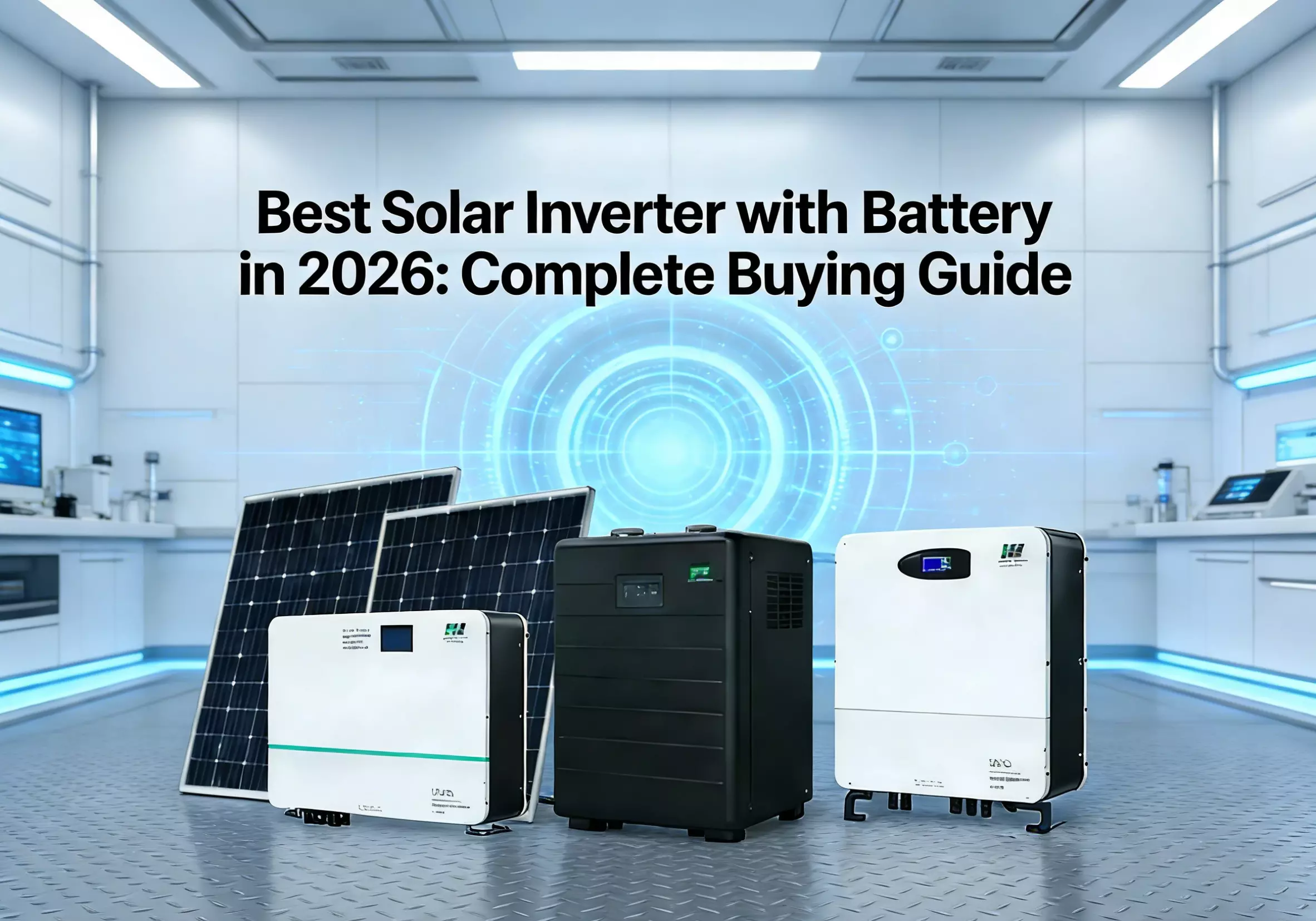
A standard PV system contains three essential parts:
- Solar Panels (Modules): Convert daylight to electricity. Types include monocrystalline (high efficiency, higher cost), polycrystalline (balanced performance), thin-film (flexible, suitable for curved surfaces), and emerging perovskite cells (lab efficiency >30%).
- Charge Controller: Regulates energy flow to prevent overcharging or discharging, extending system lifespan.
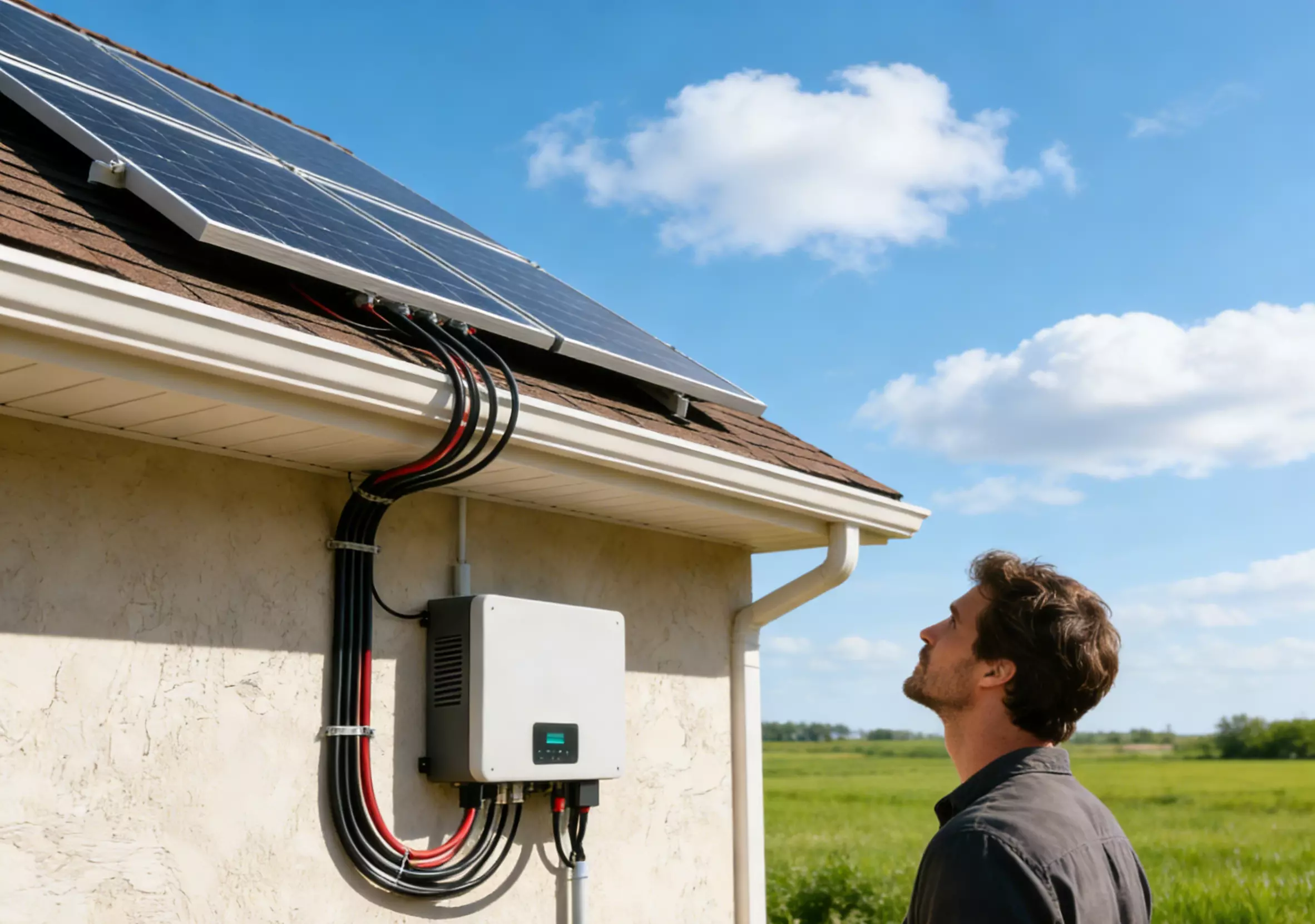
- Inverter: Converts DC to usable alternating current (AC) for homes and industries.
3. Development Timeline
- Global Milestones: From Bell Labs’ 6% efficient silicon cell in 1954 to a global installed capacity exceeding 1.5 TW by 2023.
- China’s Role: Pioneering research since the 1950s, with the 2002 "Village Electrification Project" deploying PV systems in 800+ off-grid townships. By 2024, China’s PV capacity surpassed 450 GW, accounting for 35% of the world total.
II. Diverse Applications: From Homes to Heavy Industry
1. Residential & Off-Grid Solutions
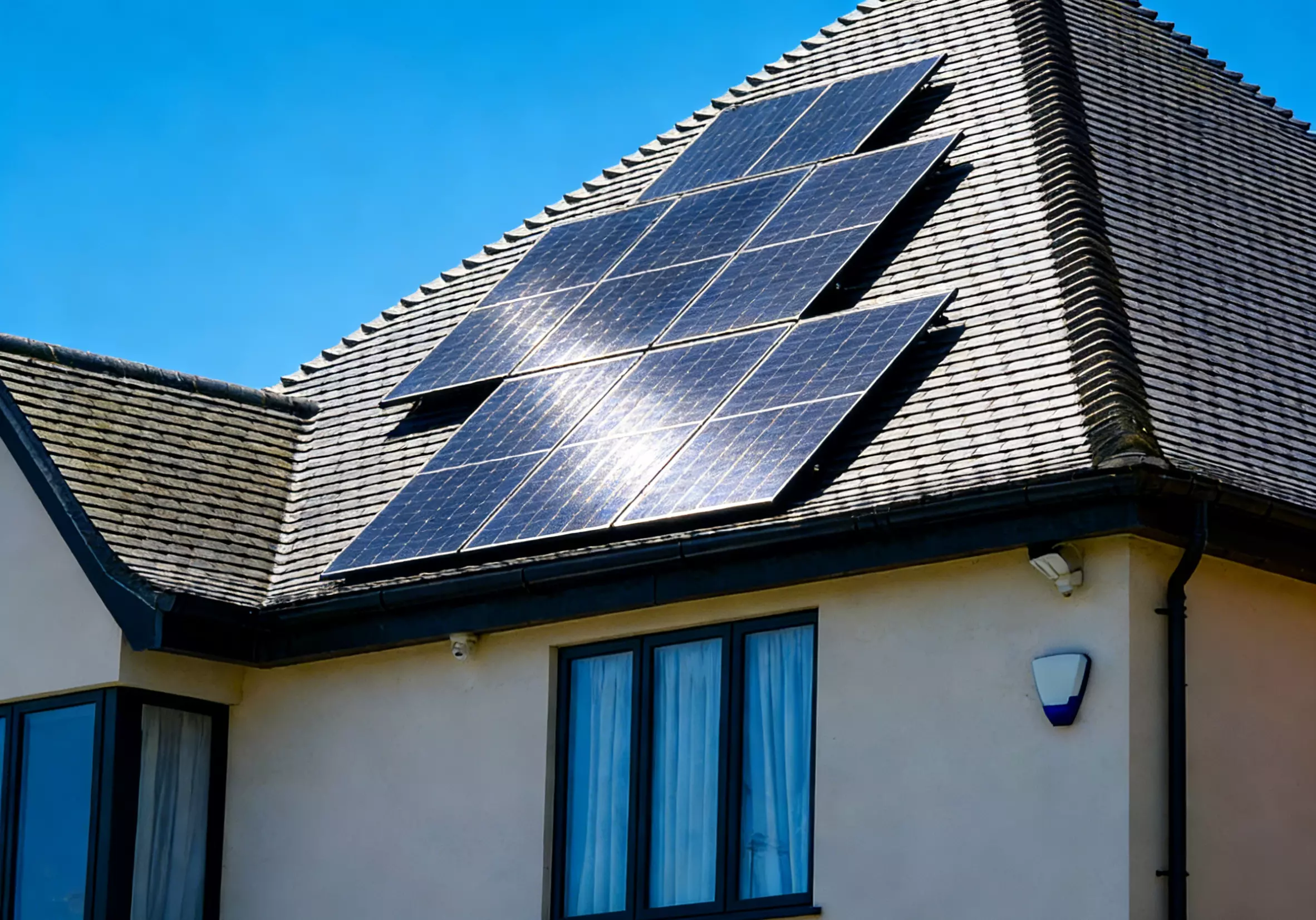
- Rooftop Solar: Households in Germany (1.5+ million installations) and California (mandatory for new homes) use PV with energy storage for self-sufficiency.
- Remote Electrification: PV systems power isolated communities and islands, such as China’s "PV Poverty Alleviation" projects serving tens of millions of households.
2. Commercial & Industrial Scale
- Utility-Scale Plants: Examples include China’s塔拉滩光伏电站 (2.2 GW) and the U.S. Topaz Solar Farm (550 MW), providing grid-scale power.
- Commercial Rooftop Projects: Corporations like Tesla and Amazon use PV to reduce electricity costs, with annual carbon reductions exceeding 1 million tons.
3. Integrated Solutions
- Agrivoltaics: Dual-use systems where PV panels generate energy while supporting agriculture under (e.g., solar greenhouses in Gansu, Shandong).
- Transportation & Infrastructure: Solar-powered highways (France’s Wattway), electric vehicles (Lightyear 0), and charging stations.
4. Niche & Advanced Uses
- Space & Research: Satellites (e.g., ISS) rely on PV; China’s "Space Three Gorges" plans explore orbiting solar power stations.
- IoT & Microgrids: PV powers remote weather stations, communication towers, and off-grid sensor networks.
III. Why PV Technology Stands Out
| Advantage | Description |
|---|---|
| Environmental Purity | 1 GW of PV avoids ~800,000 tons of CO₂ annually—equivalent to planting 45 million trees. Lifecycle emissions are 1/20th of coal power. |
| Reliability & Longevity | Panels last 25–30 years with minimal maintenance (1–2% of installation cost annually). An Australian plant retained 90% efficiency after 20 years. |
| Flexibility & Decentralization | Scales from residential rooftops to gigawatt plants, reducing transmission losses and improving energy security (e.g., as backup power during disasters). |
| Cost Competitiveness | PV electricity costs dropped 80% in a decade, hitting $0.03–0.05/kWh globally in 2023—cheaper than coal in many regions (China’s west reaches $0.02/kWh). |
| Policy & Market Momentum | Over 130 countries target carbon neutrality. The EU’s Green Deal aims for 1 TW of PV by 2030, while China plans 300+ GW of new capacity in its 14th Five-Year Plan. |
IV. Future Trends: Innovation on the Horizon
- Next-Gen Solar Cells: Perovskite cells (32% lab efficiency) may combine with silicon for 40+% efficiency; CIGS thin films excel in building-integrated applications.
- PV + Energy Storage: Projects like California’s Vistra (1.2 GW/4.8 GWh battery) pair PV with storage to ensure 24/7 power supply.
- Building-Integrated PV (BIPV): PV-integrated glass and roofing tiles (e.g., zero-carbon communities in Germany) generate 80% of a building’s electricity needs.
- Smart & Digital Solutions: AI optimizes plant design and drone-based maintenance; blockchain enables peer-to-peer energy trading in microgrids.
Conclusion: Powering a Sustainable Tomorrow
Photovoltaic technology has transcended its scientific origins to become a global energy revolution. With daylight as its fuel, it provides a path to decarbonize economies, improve energy access, and mitigate climate change. As costs fall and efficiency rises, PV is no longer just an alternative—it’s the future of energy.