Ⅰ.Why is the inverter an indispensable "brain" of the solar system?
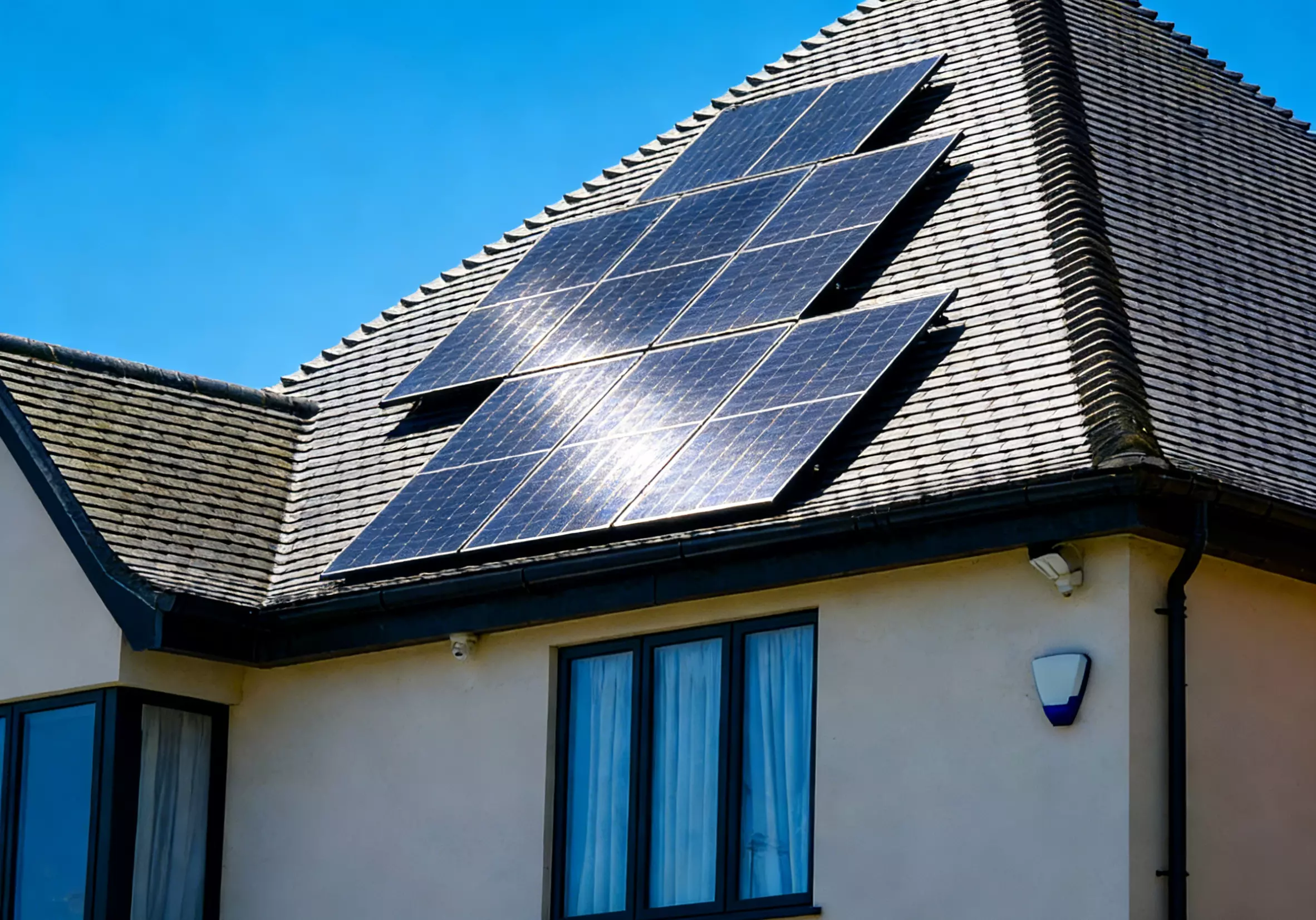
When you install rows of photovoltaic panels on the roof, you think about "green energy", "zero electricity bills" and "environmentally friendly homes", but you may ignore them - without inverters, no amount of solar panels can supply electricity to families.
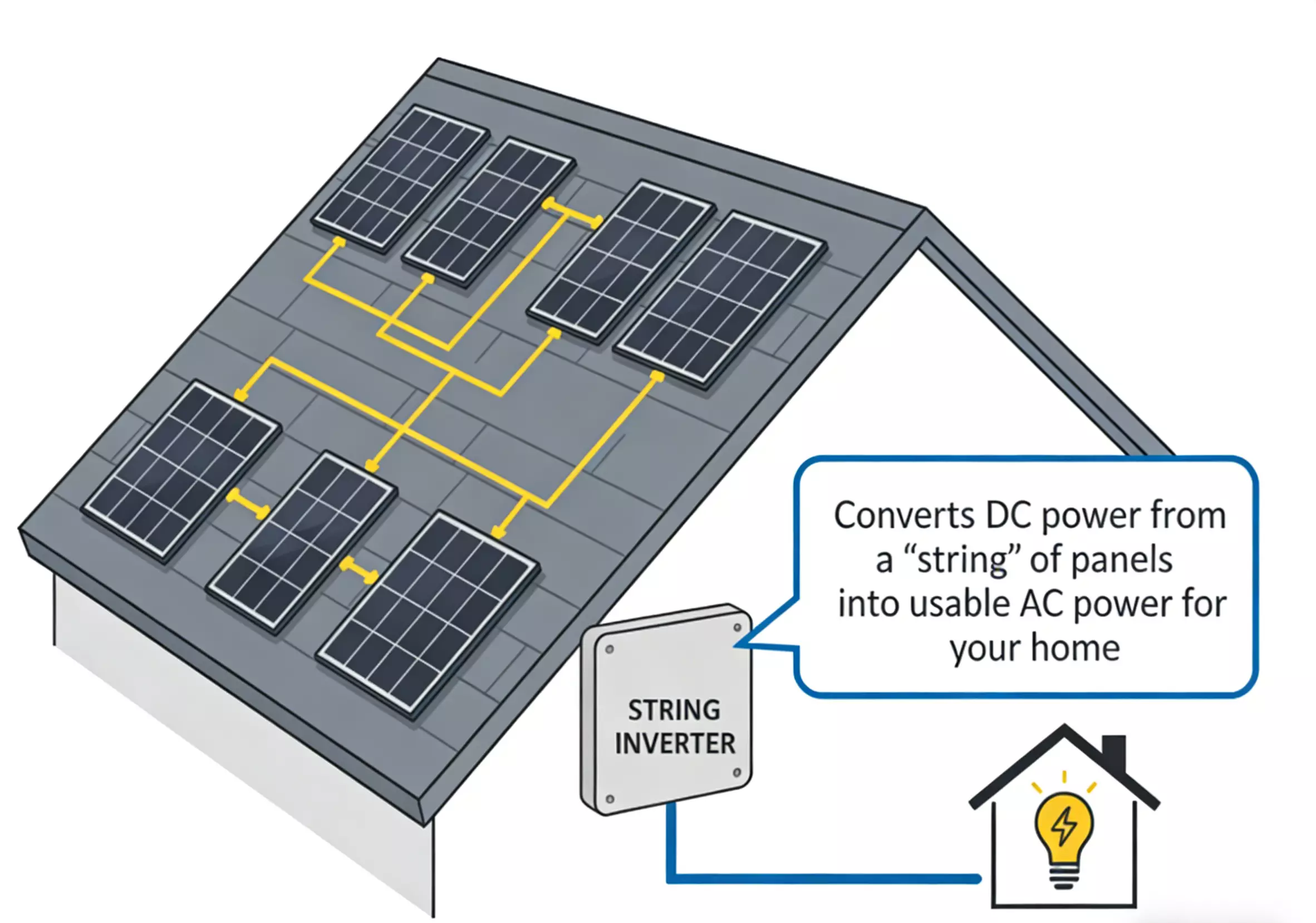
Photovoltaic panels produce direct current (DC), but almost all of our household appliances need alternating current (AC) to run. The most critical part is the equipment that "transforms sunlight into usable electricity" - solar inverter. It not only determines whether the system can generate electricity, but also affects efficiency, safety, life and daily use experience.
Therefore, the core of a good inverter solar system is to choose the right inverter to make the whole system serve you efficiently, stably and safely. Next, we will take you to a comprehensive understanding of what an inverter is, how it works, what types it is, and how to choose the most suitable one for you.
II. What is a solar inverter? What role does it play in the system?
1. The function of inverter
DC → AC conversion: convert the direct current output from photovoltaic panels or energy storage batteries into the alternating current required for home equipment.
Power adjustment and synchronization: adjust the output voltage and current to ensure synchronization with the power grid or home electricity system.
Protection and control: prevent risks such as overvoltage, overcurrent, short circuit, isolated operation and so on.
Monitoring and management (intelligent inverter): support the monitoring of power generation/power consumption data and optimize power distribution.
You can imagine it as: "transformer + dispatch center + security gatekeeper" - without it, the electrical appliances at home cannot work normally.
2 .The position of the inverter in the system
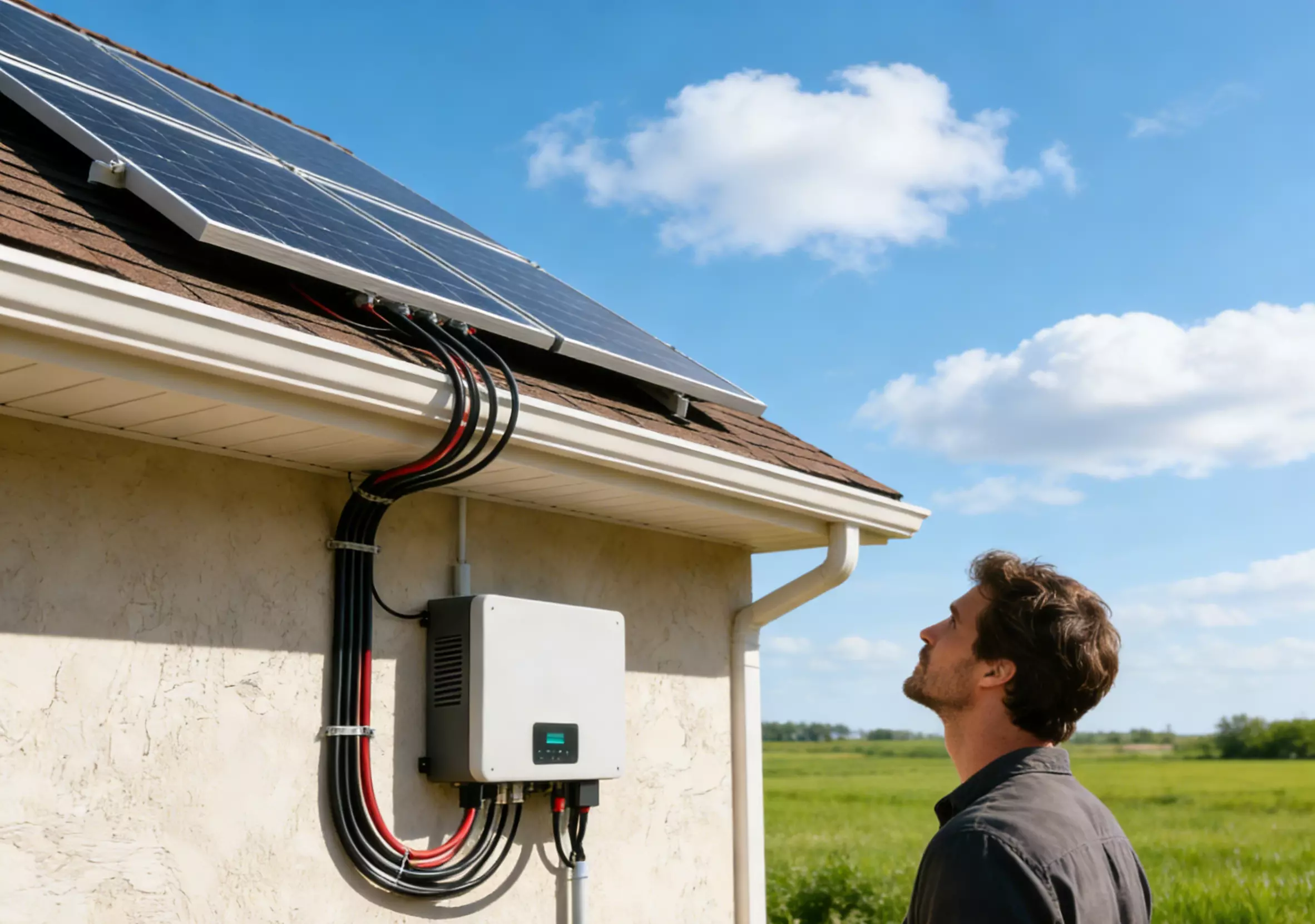
Solar Panels ——> DC ——> Inverter ——> AC ——> Household Appliances/Power Grid
↘——> (with battery) energy storage battery ——> inverter ——> AC
Whether it is a grid-on system, an energy storage system, or an off-grid system, the inverter is at the core of "electricity flow and control", which determines whether the system can operate stably, long-term and efficiently.
III. How does the solar inverter work?
Photovoltaic panels generate direct current (DC) - When the sun shines on the photovoltaic panels, the semiconductor materials on the panels will release electrons to form direct current.
The inverter receives direct current - the internal electronic components convert direct current to alternating current (AC).
MPPT maximum power point tracking - the inverter constantly adjusts the input voltage and current to ensure that the maximum possible power is obtained from the photovoltaic panel.
Synchronized with the power grid or home system - If it is a grid-lined system, the inverter will be synchronized with the public power grid; if it is an off-grid or hybrid system, it will be directly supplied to home loads or energy storage batteries.
Output and power supply use / transmit power to the power grid / charge the battery - switch flexibly according to the system configuration and power requirements.
Protection and monitoring mechanism - When abnormal situations such as overload, overvoltage, short circuit, isolated operation, etc. occur, the inverter automatically cuts off the power or alarms to protect the safety of the system and equipment.
Simply put: Every time you turn on the light, use the refrigerator, or plug in the computer, there is an inverter behind you to silently guarantee the power supply.
IV. What are the types of inverters? Which one is suitable for you?
Before choosing an inverter, it is very important to understand the advantages and disadvantages of different types. The following are the four main types of inverters and their applicable scenarios:
| Type | Application | Advantages | Disadvantages |
|---|---|---|---|
| String / Central Inverter | Standard residential roof-top PV | Low cost, high efficiency, simple installation | Shade on one module reduces whole string |
| Micro Inverter | Complex roof angles, partial shading | Per-panel MPPT, higher individual efficiency | Higher cost, more complex maintenance, best for small systems |
| Hybrid Inverter | Home storage / backup / self-consumption + grid export | Battery-ready, grid-tie & off-grid modes | Higher price, complex configuration |
| Off-grid Inverter | Remote areas without utility | Stand-alone operation, fully independent | Requires battery storage, not suitable for grid-connected sites |
Suggestion: If you just want to generate electricity during the day and return the surplus to the power grid → choose a string inverter;
If you want the system to have backup power, energy storage function, and night power consumption capacity → Hybrid inverter is recommended.
If the roof is limited, the occlusion is complex, and the system capacity is small, micro-inverters can also be considered to improve the overall power generation efficiency.
V. Why is the inverter the core of the whole solar system?
A good inverter directly determines the system: power generation efficiency, safety stability, compatibility and future scalability. It is specifically reflected in the following six aspects:
Decide whether the system can generate electricity: if the inverter is of poor quality or improperly selected, it may not be started or even scrapped.
Affect the efficiency of energy conversion: high-efficiency inverters can maximize the utilization rate of power generation and reduce waste.
Manage battery charging and discharging or network output: it is especially important for energy storage systems or dual-mode systems.
Protection system and electrical safety: prevent overvoltage, overcurrent, isolated island and other dangers, and ensure household electrical appliances and personal safety.
Support monitoring and intelligent management: remote monitoring, data recording, load management and other functions to improve the convenience of use and system efficiency.
Determine the future capacity expansion and upgrade space: a good inverter can be compatible with energy storage/photovoltaic panels with greater power and higher capacity, and support long-term expansion.
In other words, choosing the right inverter is equivalent to laying a solid foundation for your solar system.
VI. How to choose an inverter suitable for your system?
Among the many inverters, how to choose the most suitable one for you? The following are the key technical and practical references:
1. Select the power according to the system capacity and load requirements
Small unit / low power load (lighting, refrigerator, TV) → 2–3 kW inverter
Ordinary family / multi-device + partial air conditioner / water heater → 4–6 kW inverter
Large unit / multi-air conditioning + kitchen equipment + peak load → 8–10 kW (or higher) inverter
2. Do you need battery support?
If you want to use electricity at night, standby power, and off-network → You must choose a hybrid inverter that supports batteries.
If only daytime power generation + grid-connected → serial grid-connected inverter is fine.
3.Pay attention to key parameters
| Parameter | Why is it important? |
|---|---|
| Conversion Efficiency (Efficiency) | High efficiency to reduce waste, and more electricity for the family |
| Input voltage / MPPT range | Decide which photovoltaic panels are compatible with the number of series |
| Maximum input current / MPPT number of channels | Decide how many photovoltaic series and energy storage compatibility are connected in parallel |
| Heat dissipation and protection level (such as IP65) | Ensure the stable operation of the outdoor/indoor environment |
| Intelligent Functions / Monitoring / EMS Support | Facilitate remote monitoring and system management |
| Surge power / peak power support | Meet the needs of starters and high-power instantaneous start-up |
| Quality assurance and after-sales service | Extend the service life and reduce the risk of repair |
4. Brand and after-sales guarantee
Choosing a brand or supplier with standard certification and good user evaluation can greatly reduce the system failure rate and maintenance cost. It is recommended to give priority to manufacturers with complete product lines (photovoltaic + energy storage + inverter + EMS) for future system expansion and compatibility guarantee.
Huijue group has been specializing in generating and manufacturing energy storage equipment for many years, which has been widely praised by overseas users and trustworthy!
VII. Service life, maintenance suggestions and replacement guidelines of inverters
1.The life of the inverter is generally 10–15 years
Causes include aging of electronic components, wear of cooling fans, environmental impact (high temperature, high humidity, dust), etc.
2. Daily maintenance suggestions to extend life
Clean the vents and cooling fans regularly every 6-12 months to maintain good heat dissipation.
Avoid full-load operation for a long time, and use high-power electrical appliances appropriately.
Regularly check the output waveform, voltage and current to ensure stable operation.
If the system has a battery, pay attention to the battery status and the charging and discharge curve to prevent overcharging or overcharging.
3. The situation of replacing the inverter should be considered
Significant decrease in efficiency / unstable output power
The cooling fan fails / the noise increases / the shell overheats
Frequent alarm / restart / fault code appears, high maintenance cost
New energy storage/photovoltaic modules, but the existing inverters are not compatible
If these situations occur, please contact the manufacturer or professional institution for testing or replacement in time.
VIII. Why is investing in an excellent inverter the most cost-effective step for your solar system?
An inverter solar system with reasonable design, stable performance and strong compatibility is the most critical part of the whole photovoltaic system and the most likely to affect the final power generation efficiency and user experience.
It decided:
Can you smoothly change "sunshine" into "electricity for home appliances";
Whether the system is stable, safe and durable;
Whether it is convenient to expand capacity and upgrade energy storage in the future;
Return on investment and power-saving effect.
Compared with repeatedly upgrading photovoltaic panels or blindly pursuing high-power equipment, choosing a suitable inverter can often bring more stable, efficient and longer-term benefits.
If you are building or upgrading your own solar system, you might as well start with an inverter and turn your roof into a truly reliable, efficient and safe home power station.
Call for action
Want to know more about inverter models, system configuration schemes, actual quotations or adaptation suggestions? Welcome to visit our [solar inverter product page] , or contact us directly for a quotation - let the professional team help you The dream of green energy is escorted!