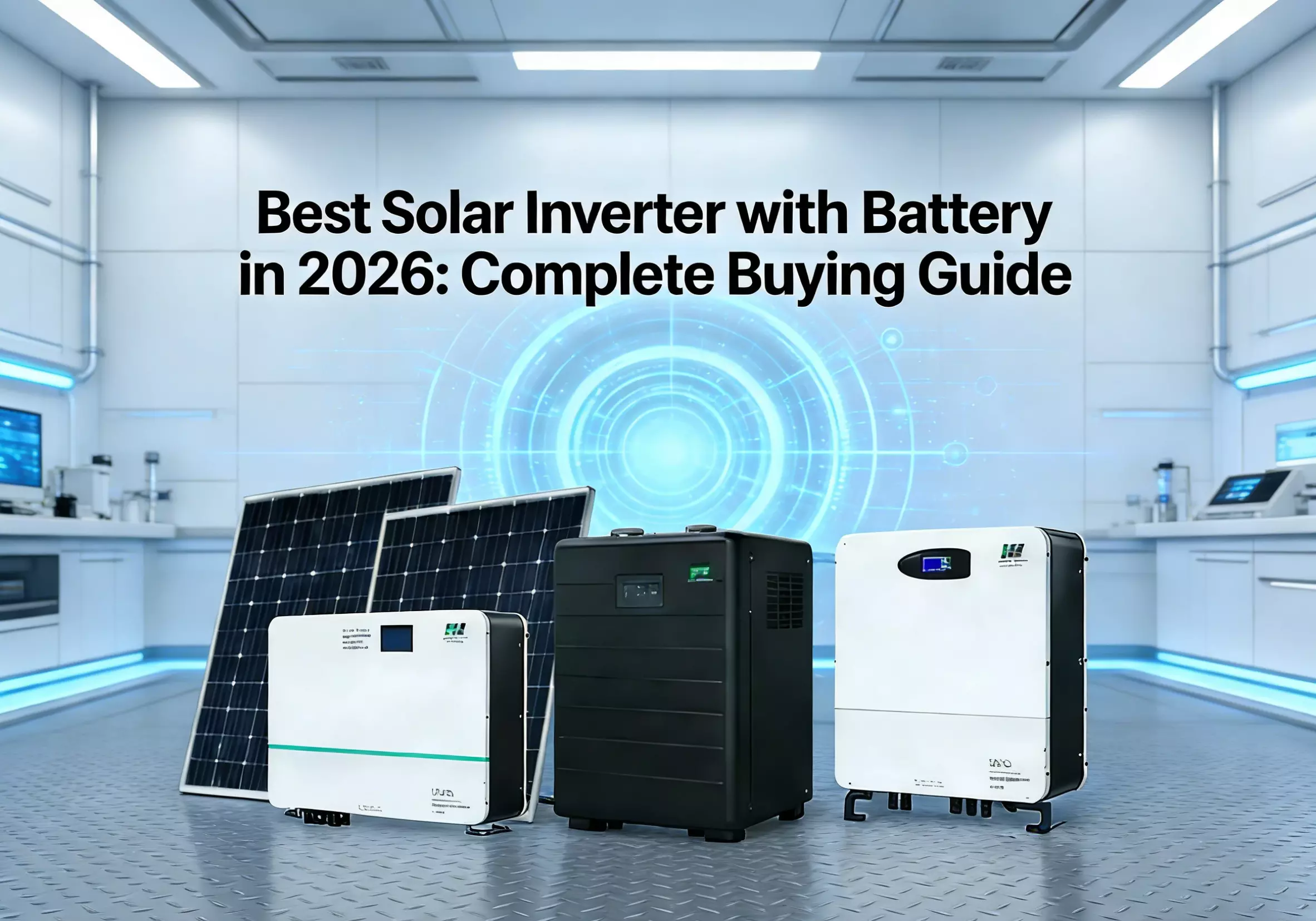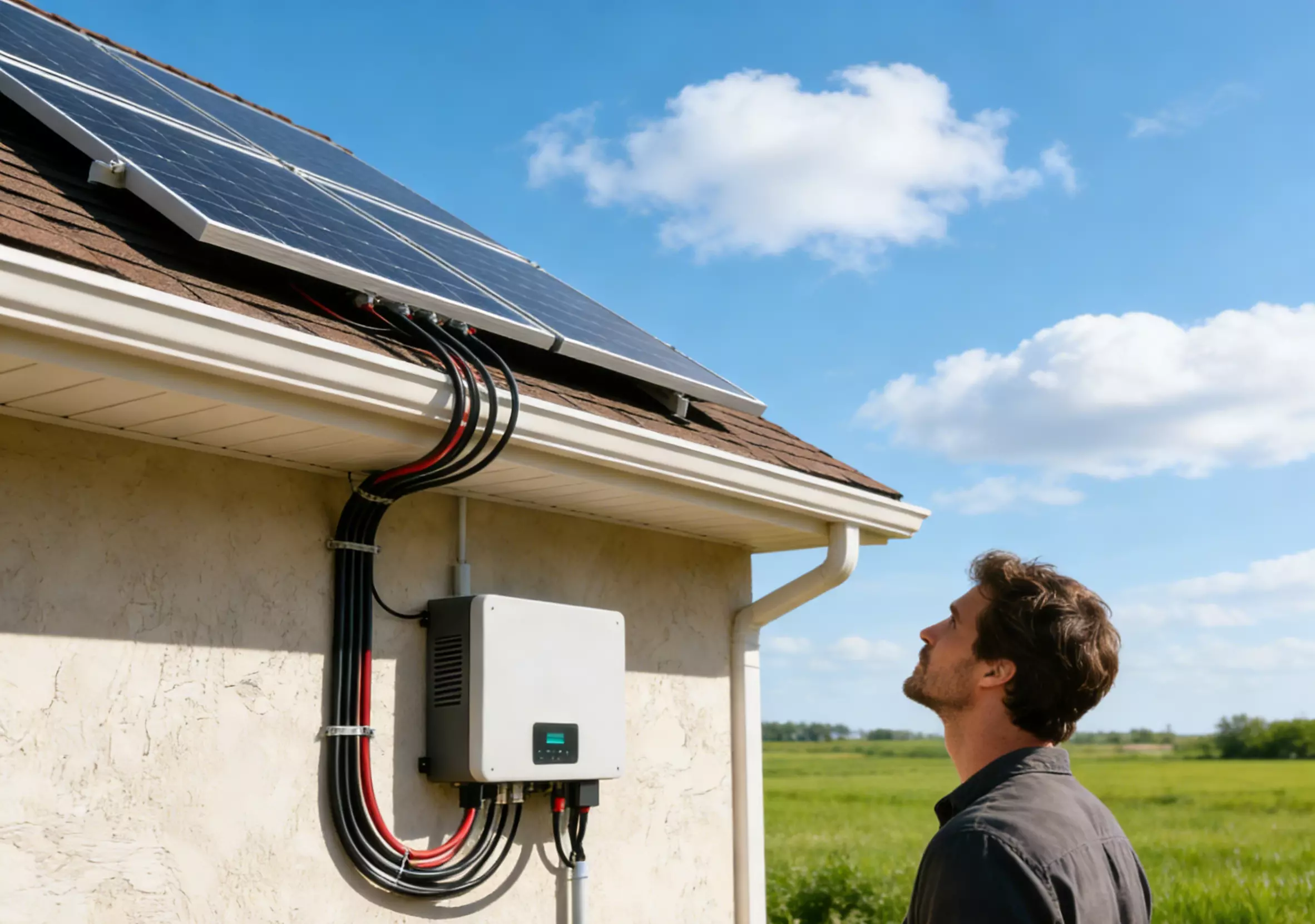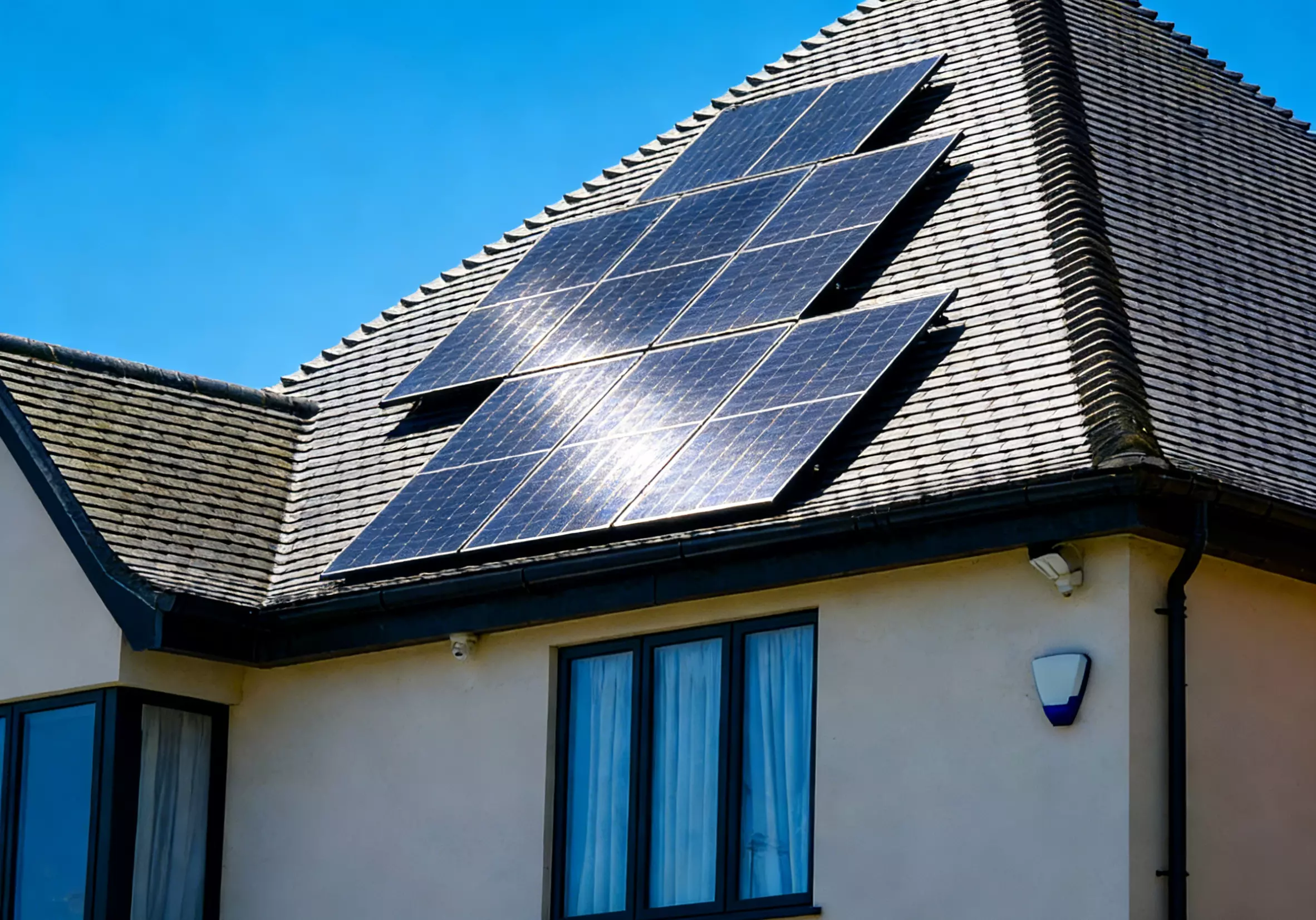
When building an efficient and stable solar system, many people only pay attention to explicit parameters such as "power, conversion efficiency and brand of solar panels", but ignore another equally important core component - Inverter.
It determines the output efficiency, stability, life and future scalability of the photovoltaic system.
It can be said that if you don't choose a good inverter, no matter how good the solar panel is, it can't give full play to the best performance.
So, in the face of a wide variety of inverters on the market, how should we choose? This article will analyze the types, functions, selection logic and application scenarios of inverters from the perspective that users are most concerned about, and help you choose an inverter that is suitable for your family or project.
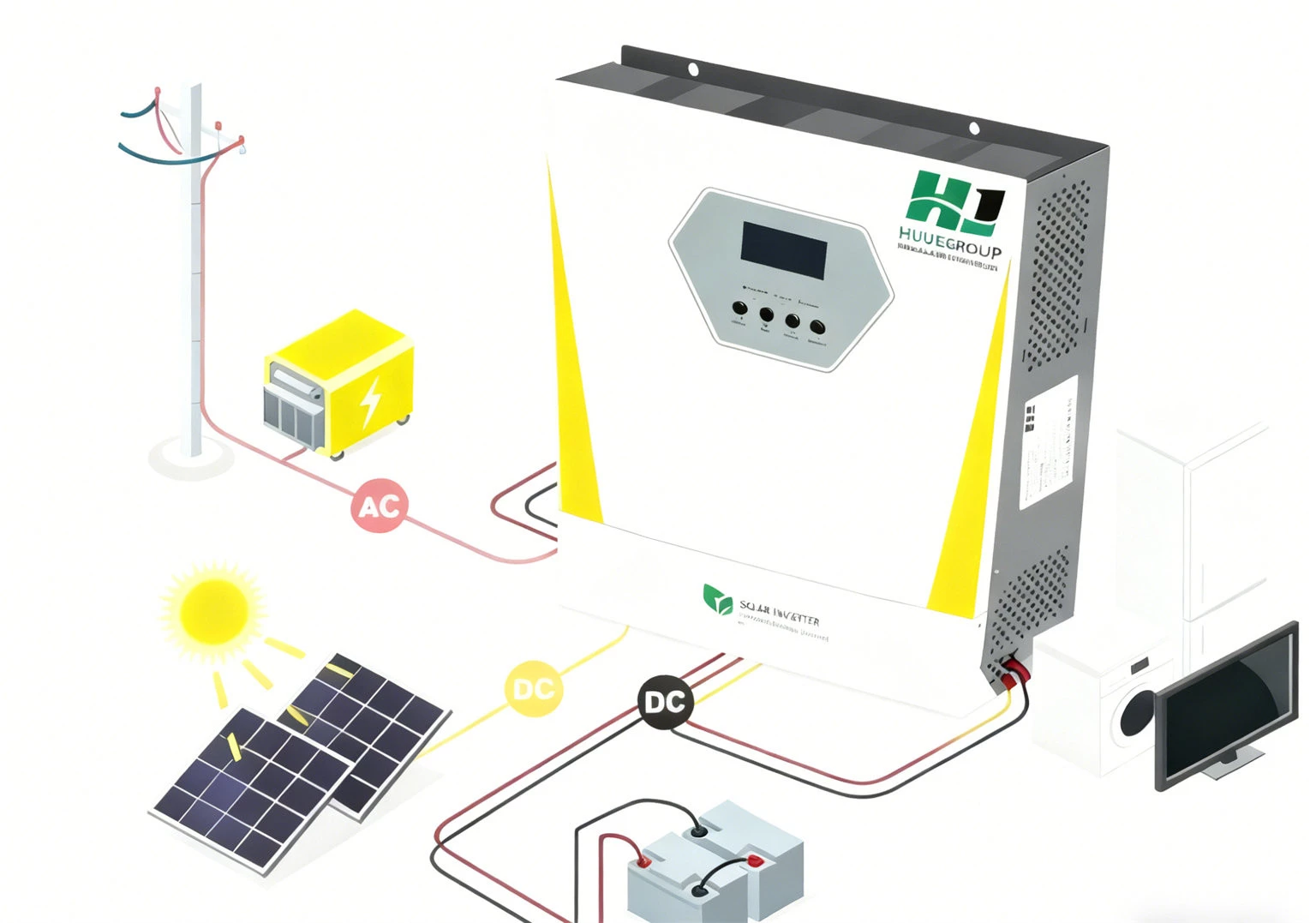
I. Why is the inverter the "heart" of the solar system?
The core tasks of the inverter are:
- Convert direct current (DC) output from solar panels into home-used alternating current (AC)
- Monitor the operating status of the system (voltage, current, temperature)
- Optimize power generation efficiency (MPPT maximum power tracking)
- Ensure the safety of electricity (overload, island protection, grounding protection)
- Management and grid-online output of power grid
- Record data and provide intelligent control functions
Simply put, a good inverter not only improves the power generation, but also makes the whole system run safer and more stable.
II. The main types of inverters: which one is the big difference?
Different inverters are suitable for different scenarios, and the wrong selection will lead to power generation loss, cost waste and even safety hazards.
1. String Inverter - the most common for home & industrial and commercial
Applicable scenarios: most residential roofs, industrial and commercial roof power stations
Advantages:
- The cost is low
- Reliable and easy to maintain
Disadvantages of unified management of the whole system:
- Shadows and dust will affect the power generation of the whole group of components.
Suitable for users: Ordinary home and commercial scenes with unobstructed roofs and the same orientation of components.
2. Micro Inverter - Each board generates electricity independently
Applicable scenarios: balcony photovoltaics, some household photovoltaics
Advantages:
- Each panel operates independently and is not affected by obstruction.
- Safe voltage, suitable for home installation
- Can be expanded at any time
Disadvantage:
- The cost is higher.
- Distributed installation, relatively complicated maintenance
Suitable for users: Balcony photovoltaics, distributed installation, small system users.
3. Hybrid Inverter - suitable for energy storage system
It can manage solar panels + batteries + power grids at the same time, which is the fastest growing type at present.
Advantages:
- Support battery energy storage system
- Equipped with emergency standby power (EPS) function
- More energy-saving and flexible
Disadvantage:
- The cost is slightly higher.
Suitable for users: Families who need a backup power supply, want to reduce electricity bills or plan to expand energy storage in the future.
4. Off-Grid Inverter - for use in areas without grid
Applicable scenarios: remote mountainous areas, outdoor camps, off-net cabins
Advantages:
- No need to connect to the power grid at all.
- With battery to achieve independent power supply
Disadvantage:
- It must be matched with energy storage.
- The design and configuration are more complicated.
Suitable for users: The scene that can't connect to the power grid at all.
III. Key steps to choose a suitable inverter
1. Select the inverter capacity according to the power of the solar system
Inverter power ≈ 80%-120% of the total power of solar panels
(Generally recommend a configuration of 1:1 or slightly lower than 1)
For example:
You have a 5kW photovoltaic system.
→ Just choose a 4kW–5kW inverter.
2. Confirm whether you need the energy storage function
- Only connected to the grid to generate electricity? → Group string inverter
- Can I use electricity when there is a power outage? → Choose a hybrid inverter
- Completely off-net? → Off-network inverter
3. Is the roof covered?
- With cover (chimney, shade) → select micro-reverse / power optimizer system
- No cover → Just choose a group of string inverters.
4. Do you need intelligent monitoring?
Most users hope to:
- The power generation can be seen.
- Remote monitoring of the operating status
- Find the fault in advance
→ Choose an inverter with WiFi/APP.
5. Safety performance
High-quality inverters should have:
- Protection against isolated islands
- Overvoltage, overload, short circuit protection
- Anti-reverse connection protection
- High temperature protection
- IP65 outdoor protection level
These directly determine the life and safety of the inverter.
IV. How to choose the inverter brand?
Choosing among many solar inverter brands is often more difficult than choosing a panel or battery. As the "core controller" of the whole solar system, the performance, reliability and after-sales ability of the inverter directly affect the long-term stable operation of the system. Therefore, when choosing an inverter brand, the following key factors are the most concerned by consumers:
1. Brand stability
- Has the brand focused on the inverter or energy storage industry for a long time?
- Do you have experience in large-scale projects?
- Is there any continuous product upgrade and technical support for many years?
These are directly related to the reliability of product quality and the long-term updating ability of technology.
2. After-sales service ability
The inverter is an electronic power equipment, and the probability of failure is not zero. What users are more concerned about is:
- Can you respond to the failure quickly?
- Is there a local service team?
- Is it convenient to replace accessories and maintain them?
The more perfect the after-sales service, the more reassuring the long-term use experience of the system will be.
3. Inverter efficiency
The higher the conversion efficiency of the inverter, the lower the loss, and the better the overall power generation return.
Generally speaking:
- More than 97% ⇒ can be regarded as excellent
- 98%+ ⇒ belongs to the high-end level
High efficiency means higher conversion rate, lower heat generation and more stable operation.
4. Heat dissipation ability
The inverter is in high-power operation for a long time. If the heat dissipation is not good, it is easy to occur:
- Performance decline
- Frequent reduction
- Shortened service life
Excellent brands will especially strengthen the heat dissipation design, such as large-area aluminum heat sinks, intelligent fan adjustment or natural air-cooled structures.
5. Warranty period
Inverters are one of the most malfunctionable components in solar systems, so quality assurance is very important:
The 10–12-year warranty is the most ideal.
Some high-end brands can extend the warranty to 15–20 years.
This represents the brand's high confidence in the reliability of its own products.
If you are looking for an inverter brand with reliability, efficiency and long life, solarinverterbattery is a priority choice - its products are outstanding in terms of stability, energy efficiency conversion and energy storage compatibility, and are very suitable for home and commercial solar systems for a long time. Use.
V. Frequently Asked Questions FAQ
Q1: How long can the inverter last?
Generally 8–12 years, top products can last for more than 15 years.
Q2: Does the inverter have to be installed in a cool place?
Yes, overheating will affect efficiency and life.
Q3: Does the inverter break down before the solar panel?
Usually, because inverters are electronic devices, while solar panels have a longer life (25 years+).
Choosing a good inverter means choosing the future of the whole photovoltaic system.
For photovoltaic systems, inverters are not disposable accessories, but key components that determine the efficiency, safety and life of the system.
Whether you are going to install household photovoltaics, balcony photovoltaics, or users who want to increase energy storage systems in the future, you should accurately choose the type of inverter according to your actual needs.
If you want to further consult the specific project configuration and inverter selection scheme, you can also continue to tell me, and I can help you make a complete configuration table according to your system scale and scenario.