As part of the continuous development of the current power system, energy storage batteries are becoming an integral part more and more. Particularly in Germany and further in Europe as a whole, grid managers are relying more and more on battery energy storage systems (BESS) to cover power demand and supply, stabilize the grid frequency and voltage, and increase the efficiency of integrating the renewable energy.
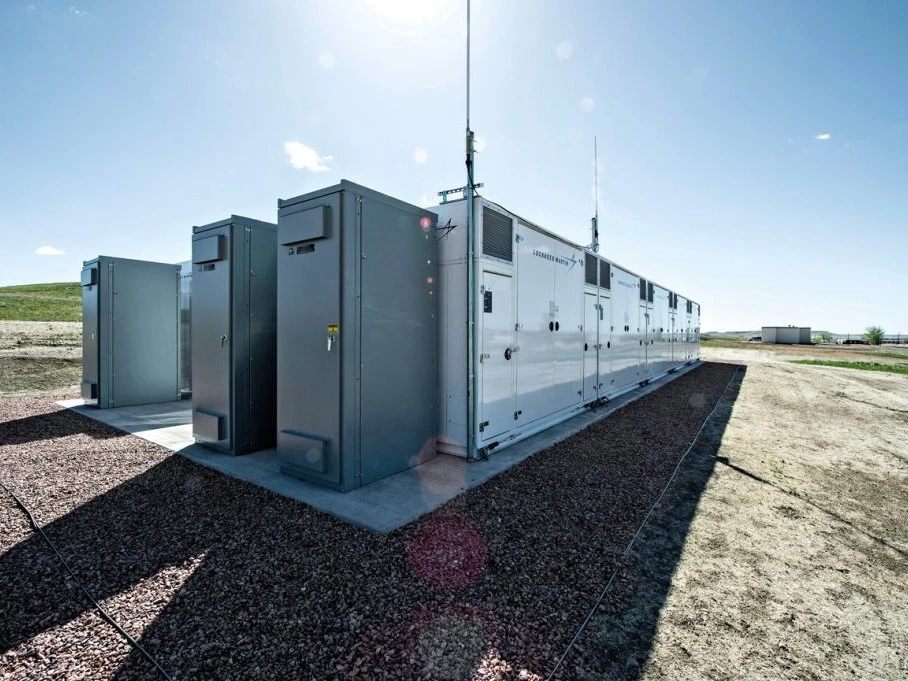
How do batteries help the grid operate more stably?
With the large-scale access of intermittent energy sources such as wind and solar power, the importance of ancillary services such as frequency control reserve (FCR), automatic frequency recovery regulation (aFRR), manual frequency regulation (mFRR) and black start functions has become increasingly prominent. Traditional synchronous generators or large capacitor devices can no longer undertake these tasks independently. In contrast, modern battery energy storage systems have millisecond-level fast response capabilities, can flexibly release reactive power, and achieve precise scheduling according to grid demand, effectively maintaining voltage and frequency stability.
For example, in Germany, GAZ Energy deployed a containerized energy storage system with a capacity of 5MWh and a power of 2.5MW, which is dedicated to key grid services such as frequency regulation and reactive power support, demonstrating the strategic value of battery energy storage in the modernization of power systems.
Technical Specs: What a Typical Grid-Stabilizing Battery System Looks Like
| Feature | Typical Specification |
|---|---|
| Capacity | 2 MWh to 50+ MWh per site |
| Power Output | 1 MW to 50 MW depending on scale |
| Physical Form | Containerized units (10 ft–40 ft) |
| Battery Type | Li-ion (LFP or NMC), cycle life ≥ 6000 cycles |
| PCS (Power Conversion) | Capable of 2–5 MW AC mirror power output |
| Compliance & Protection | IP65, fire suppression, seismic-rated |
Case in point: Dresden’s municipal utility (DREWAG) installed a 2.7 MWh / 2 MW BESS (LG Chem JH2 pouch cells) with full power activation under 30 seconds for primary frequency regulation
Real-world Applications in Germany
Northern Germany: Massive Grid Backup
In July 2025, a 104 MW battery facility of 64 container units entered service to reinforce northern Germany's grid by absorbing excess wind energy and flattening peaks. It can supply around 170,000 homes for two hours
Schwarze Pumpe (Lower Lusatia): Europe's Big Battery
A 50 MW, 53 MWh Li-ion BESS commissioned in 2021 is providing primary control reserve (FCR) and grid relief services, offering solid support in frequency management and renewable integration
These images show how batteries stabilize the grid by opportunistically sucking up or sending out energy in seconds, outpacing traditional generators in speed and effectiveness.
Financial & Market Trends
Germany's battery storage capacity grew from 1.4 GWh to 1.8 GWh in 2024, and the pipeline holds another 3.7 GWh by 2027
Analysts estimate that had Germany deployed just 2 GW of battery capacity in mid-2024, natural gas imports could have decreased by €2.5 million per month
Revenue models are changing from reliance on ancillary services towards maximization of cross-markets, e.g., energy arbitrage (rescheduling power between high and low price windows in time), intraday transactions, and capacity markets
Why Energy Storage Batteries Win
- Extremely rapid response for frequency control (FCR, aFRR): Seconds, not minutes.
- Multi-purpose: Control voltage, operate as reactive power consumer, offer black start function.
- Scalable & modular: From 1 MW microgrids to 100+ MW grid-scale applications.
- Cost developments: Utility-scale Li-ion battery LCOE projections drop below USD 200/MWh by 2030
A Success Story: DREWAG Grid Stabilization, Dresden
DREWAG's 2 MW / 2.7 MWh Nidec ASI BESS stabilized the Dresden grid following periods of high solar and wind generation. The project automated primary frequency control and reduced reliance on "must-run" fossil units. Its specifications include a 2.4 MVA converter, 714–987 V DC, water-cooled PCS, IP65 stainless steel enclosure, and over 6,000 full-load cycles at 80% DoD
Why Choose Huijue Group's Energy Storage Batteries
As a "battery storage solutions" professional, you can assert with confidence:
- Huijue Group's modular high-safety Liêiron phosphate (LFP) chemistry-based energy storage cabinets.
- Integrated BMS/EMS for smart control, fast dispatch, and safety provisions (overcharge, over-current, thermal alarms).
- Specifications from hundreds of kWh up to multi-eMWh systems, optimized to fit into containerized form factors (up to 40-ft equivalent).
- Designed for off-grid, back-up, or grid-connection installation—ideal for co-location with solar + storage, peak shaving, backup, and ancillary revenue services.
- Huijue's cost positioning is competitive on€kWh cost (especially compared to European competitors), backed by long-term warranty and global after-sales service.
For additional product details, see Huijue Group energy storage products on product pages.
Key Long-Tail Keywords to Use Naturally
- energy storage batteries for grid stabilization
- battery energy storage systems ancillary services
- containerized battery storage Germany
- modular BESS for frequency regulation
Conclusion
Energy storage batteries (BESS) are transforming Germany’s power grid by offering reliable, fast, and scalable support for frequency and voltage control. From the Dresden municipal utility to the 104 MW northern German project, these systems show real-world impact. With mounting capacity and evolving revenue models, they’re essential for a renewable-heavy future.
Huijue Group’s storage cabinets deliver the performance, flexibility, and safety necessary to make your mobile or grid-connected BESS deployment a success—ensuring that batteries not only stabilize the grid but also deliver value, reliability, and peace of mind.