Solar farm projects are evolving fast, and Europe just raised the bar. On June 20, 2025, the continent's biggest floating solar plant—the Les Îlots Blandin project—went into operation in Perthes, France. Built on what was previously a 127-hectare gravel quarry, the plant now produces 74.3 MW of green energy from over 135,000 solar panels, enough to light up approximately 37,000 homes.
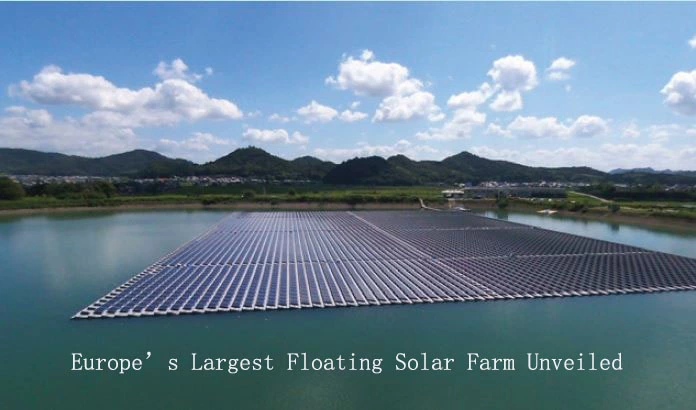
Why Floating Solar Farms Make Sense
Floating solar farms are not only space-efficient but also perform better in certain cases. Here's why they are on the radar:
- No land conflict: Utilizing industrial water bodies like gravel pits prevents land-use disputes.
- More efficient: Water naturally cools panels, increasing power output by a maximum of 15%.
- Less evaporation: They protect water reservoirs from evaporation.
- Scalable and modular: They can be made adjustable to water levels and automatically expand.
A Smart Use of Abandoned Sites
Q Energy and Velto Renewables spent years conceptualizing the project. By opting for a retired industrial site, they avoided conventional regulatory issues related to land acquisition. Construction began late in 2023, using floating structures of Ciel & Terre International, one of the top suppliers of FPV (floating photovoltaic) platforms.
Technical Challenges—and Solutions
| Challenge | Solution |
|---|---|
| Anchoring | Flexible mooring adapts to water level changes |
| Corrosion | Marine-grade materials ensure durability |
| Wildlife impact | Panels placed to preserve aquatic ecosystems |
| Maintenance access | Walkways allow easy access for cleaning and checks |
Floating Solar in Global Context
While Asia, led by China and India, is positioned at the forefront of floating solar, Europe appears to be catching up rapidly. Les Îlots Blandin is establishing new norms in Europe and serves as a model for transforming former industrial sites into productive clean energy centers. Countries such as Spain are laying down floating solar-friendly policies and allowing up to 15% use of their reservoirs.
Real-World Impact and Future Outlook
It exemplifies the sustainable scale-up of floating solar technology. Its benefits include:
- Land conservation
- High-yield energy generation
- Long-term water conservation
- Increased public acceptance due to little land use
Worldwide, floating solar will possibly expand to reservoirs, canals, and even at shores. Innovations such as hybrid hydro-FPV setups or integration with energy storage will be focusing on driving its future.
Huijue Group’s Role in Solar + Storage Solutions
For any large solar project—floating or land-based—energy storage is essential. That’s where Huijue Group steps in. Our containerized ESS systems offer scalable 6–25 MWh capacity per unit.
Key features include:
- Advanced LFP battery chemistry
- Smart EMS for real-time energy control
- Rapid deployment and modular installation
- IP-rated protection and thermal/fire safety systems
Our systems are perfect for grid support, industrial peak shaving, and off-grid floating solar farms. Explore our containerized ESS systems here.