A. Air Cooling
Method: Pass ambient air through the battery rack using fans or vents.
Advantages: Low cost, maintenance-friendly, easy.
Disadvantages: Not effective at high temperatures; potential for creating hot spots.

Home / Blog / Building a Battery Energy Storage System: Efficient Thermal Management Solutions
2025-07-02Well-designed battery energy storage systems (BESS) are growing rapidly worldwide. For efficient and safe operation, thermal management is necessary. Proper temperature management can maintain the efficiency of the battery, prevent degradation, and reduce the likelihood of fire. In this blog, we will talk about key cooling technologies, best practices in modeling, and practical design steps and end with how Huijue Group's solutions can improve your BESS project.
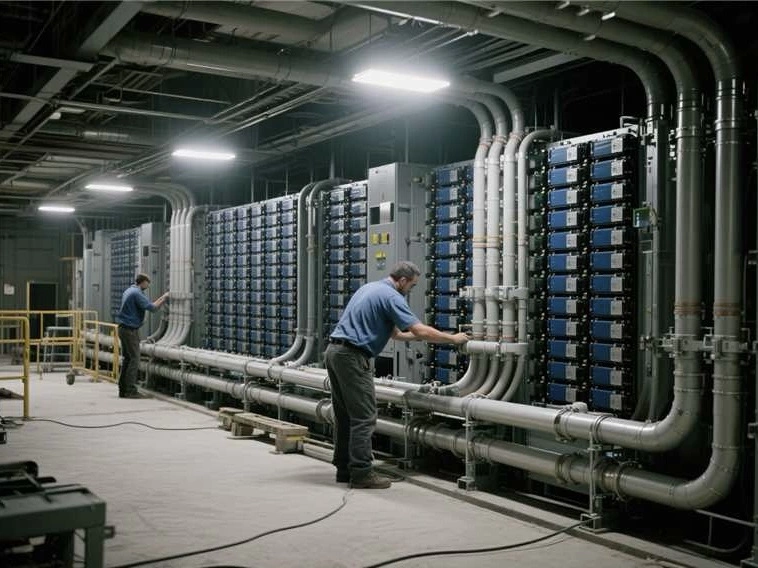
Key point: Maintaining proper temperature control instantly prolongs the battery life, performance, and safety of the battery energy storage system.
Method: Pass ambient air through the battery rack using fans or vents.
Advantages: Low cost, maintenance-friendly, easy.
Disadvantages: Not effective at high temperatures; potential for creating hot spots.
Method: Liquid coolant moves through channels or pipes around the battery.
Advantages: Extremely precise and even temperature control, optimally suited to high-density systems.
Disadvantages: Higher expense and complexity, potential leak points.
Method: Combines air and liquid systems—e.g., liquid cooling core modules and cabinet fans.
Advantages: Binds cost and efficiency together.
Disadvantages: Requires system coordination.
Before you actually make a physical model, you ought to use computer modeling in order to understand the heat flow within a battery energy storage system (BESS).
For instance, in the liquid-cooled BESS simulation, the temperature differential between modules was approximately 13°C, and the maximum differential could be 28°C. In the air-cooled rack, the back cells were warmer, leading us to enhance the airflow grille design.
Thermal runaway—if an overheated battery ignites surrounding cells—is a critical safety risk.
Modeling approaches are:
Simulation testing can support engineers to enhance safety before real-world deployment.
This is a concise checklist to guide BESS thermal system design:
Liquid-cooled BESS: Simulated 14,000s at 1C, showing even temperatures across modules and peak at 28°C.
Air-cooled BESS: Identified hotspots at the rear due to uneven airflow—highlighting the need for improved internal ventilation or layout adjustments.
These examples highlight how simulation can guide better system design and prevent failures.
Build or enhance battery energy storage systems, choose Huijue Group, and enjoy better safety, smart control, and long-term design.
With Huijue, you will obtain advanced modules, intelligent management systems, and professional services to ensure the safe, efficient, and stable operation of your battery energy storage system.
We provide end-to-end solar energy storage solutions, customized to your specific site and needs. Our comprehensive service includes:
Partner with us to power a sustainable future. Let's build a cleaner world, together.

What is a Battery Inverter for Solar and Why Do You Need One?
Best Solar Inverter with Battery in 2026: Complete Buying Guide

What Are the Best Solar Inverter Brands of 2026? Expert reviews

String Inverter Explained: Pros and Cons for Home and Business Solar Systems

Solar Inverter Price Guide 2026: How Much Does a Solar Inverter Cost?