In the past three years, the number of installations of global home energy storage systems has continued to rise. Whether in the United States, Europe or Southeast Asia, the demand of home users for "electricity security" has reached an unprecedented level.
I. Why do more and more families begin to install battery inverters to achieve home energy storage?
The reason is very realistic:
- Power outages are more common than you think: community tripping, rainstorm, typhoon, power grid failure... It is especially frequent in the high temperature season.
- Electricity prices continue to rise: the price difference between peaks and valleys in many countries is more than 3 times.
- Household appliances cannot be turned off: the refrigerator cannot be turned off, WiFi cannot be turned off, and the air conditioner cannot be turned off.
- Teleworking & Family Education: Computer Power Outage = Total Work Stoppage
The most core device of "home energy storage" is what this article will talk about today - Battery Inverter.
It allows you to have a "small power station" at home:
- Save electricity during the day and use electricity at night; save electricity when the power grid is stable, and automatically take over the power supply when there is a power outage, so that your home can truly realize "electricity without panic".
Next, we will take you to thoroughly understand "how home energy storage makes your home constantly electricity" in the most popular and practical way.
II. What is a battery inverter?
Many people have heard of "Home ESS", but there are only two real core devices:
- Battery + Inverter.
Simple understanding:
- The battery is responsible for 'storing electricity' (energy storage unit, electricity is DC)
- The inverter is responsible for converting direct current into alternating current (AC) for home use.
The combination of the two is what we often call the battery inverter system.
If explained in everyday language:
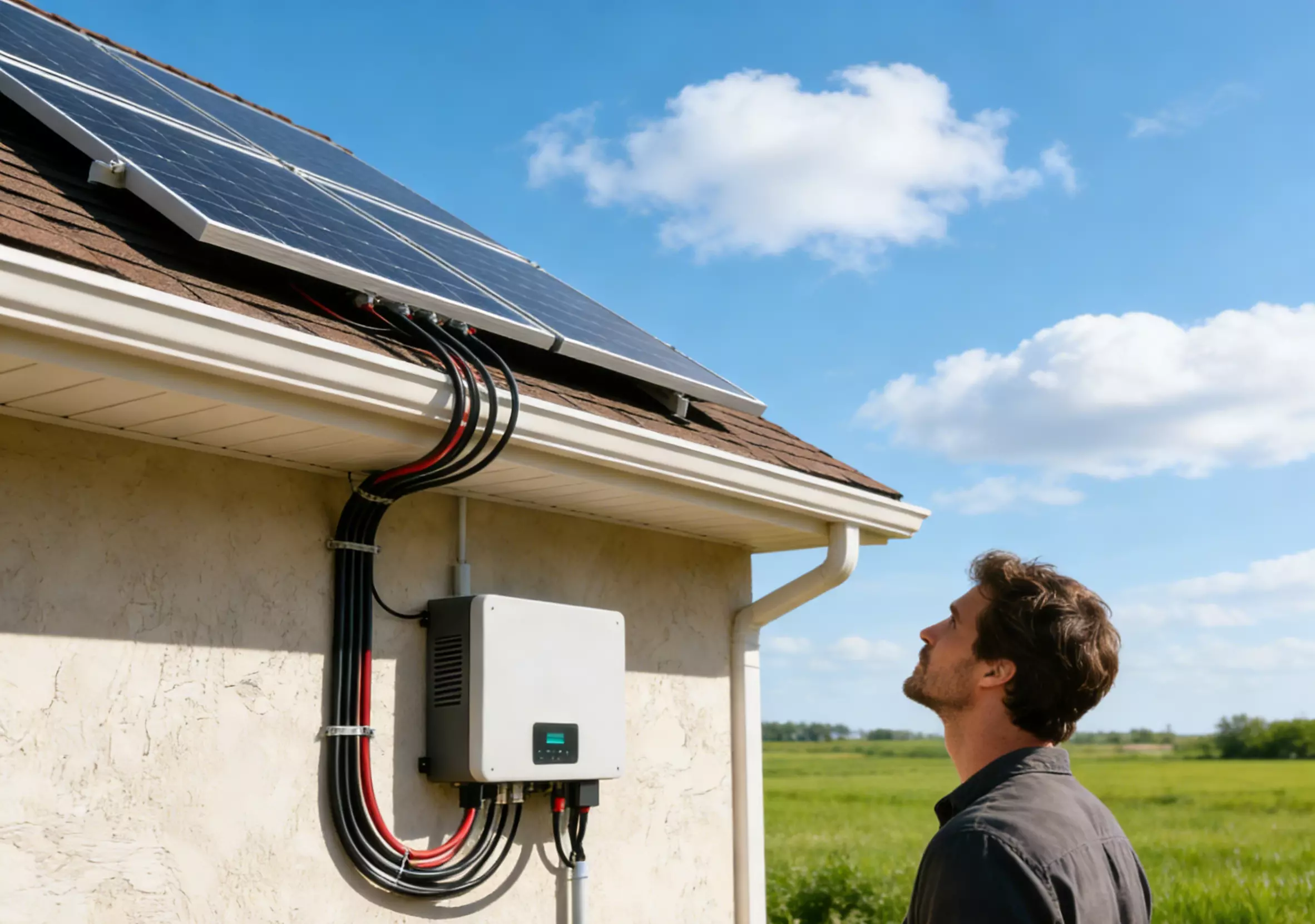
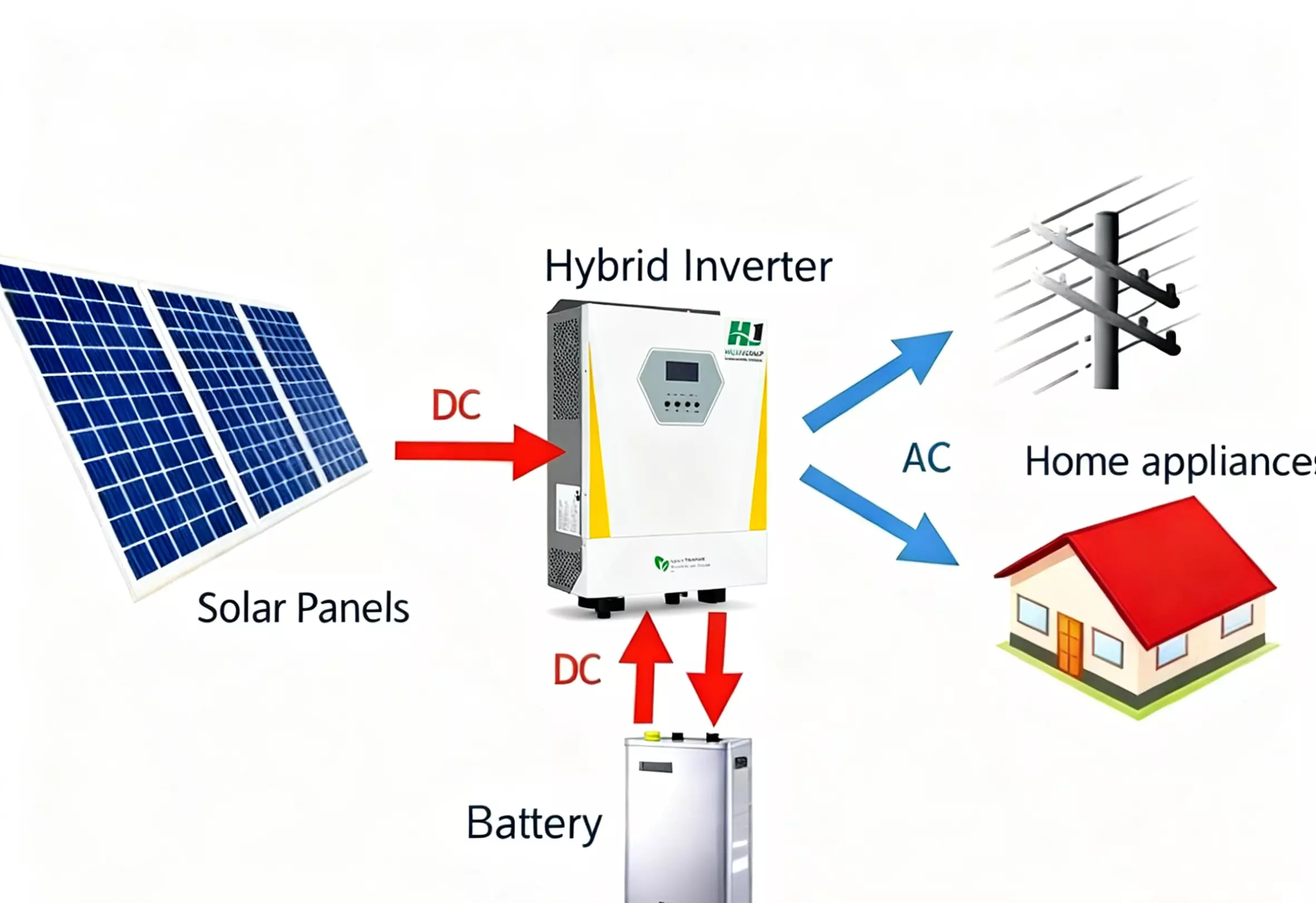
- Electricity from solar panels → enters the battery storage → the inverter converts electricity into 220V electricity that can be used at home.
Therefore, battery inverter is often searched as:
- Storage inverter
- DC-AC battery inverter
- Residential battery inverter
- Off-grid battery inverter
- Battery energy storage inverter
- ESS inverter (energy storage system inverter)
With proper installation, the home is like having a:
- "A small power station on standby at any time".
III. How does the battery inverter system power the home? (The most critical and core part)
A complete battery inverter home system usually supports three operating modes:
- Daytime: Solar power generation → Household + Battery charging
If the system contains solar energy:
- Solar panels first supply power to household loads.
- The excess electricity is stored in the battery.
- After the battery is full, it will be sold to the power grid (grid-based power station)
At this time, the inverter is the "dispatching center", which determines where the electricity comes from and where it goes.
- Evening: Battery discharge, bearing most of the household electricity
During the peak of electricity consumption (from 7 p.m. to 11 p.m.):
- The battery inverter releases the stored electricity.
- Families give priority to batteries and reduce the purchase of electricity from the power grid.
- The country can save a lot of money with the peak and valley electricity price.
This is one of the core functions of battery to grid inverter.
- During a power outage: automatically switch UPS energy storage power supply in 0.01 seconds
You must have experienced these:
- The power grid tripped, and the refrigerator was out of power.
- Half of the game has not been saved.
- The computer in the meeting suddenly shut down.
But after having the ESS inverter system:
- Power outage → 0.01 seconds switch → "no power out" at home.
That's why home users are paying more and more attention to home battery inverters.
IV. Advantages of household battery inverters
The following content is very important, which directly determines whether users are willing to continue reading.
- Power outage = family sense of security bursts
There is only one issue that home users are most concerned about:
"The power is out. Can my house still work normally?"
The answer given to you by the battery inverter is YES!
- Save electricity bills (peak and valley electricity price arbitrage)
In many countries or regions:
- The electricity price is expensive during the day.
- The electricity price is cheap in the early morning.
You can charge the battery at a low price and discharge it at a high price.
The monthly electricity savings are very considerable.
- It is very expandable, and it is very convenient to add solar energy in the future
One of the biggest benefits of battery inverter:
- Can be used alone
- It can also be expanded into a home photovoltaic + energy storage system.
- Protect household appliances and extend life
The output voltage of the inverter is stable and the waveform is pure:
- It is safer for refrigerators, TVs and computers.
- Avoid damage caused by unstable voltage
- Green and environmentally friendly, no longer rely on diesel generators
Compared with noisy and smoky diesel engines:
- No noise in the battery system
- No emissions
- More suitable for long-term family use
V. What size inverter should the family choose? How big is the battery?
This is the part that users want most, and it must be written in detail and professionally.
① How to choose the power of the inverter?
Household Type
| Household Type | Recommended Inverter Power | Appliances Supported |
|---|---|---|
| Small apartment, basic appliances | 3 kW battery inverter | Lights, TV, refrigerator |
| Standard household (main system) | 5 kW storage inverter | + 1 AC unit, microwave |
| Large home, multiple ACs | 8–10 kW ESS inverter | Multiple ACs, full kitchen |
In summary:
- 80% of households are suitable for a 5kW battery.
- Larger homes or households that may add electric vehicle charging stations in the future are advised to choose 8–10kW.
② How to choose battery capacity?
Calculation formula:
Battery capacity ≈ Household electricity consumption over 10 hours at night
Reference value:
| Usage Profile | Recommended Capacity |
|---|---|
| Basic Backup | 5 kWh |
| Standard Household | 10 kWh |
| Large Home / Villa | 15 – 20 kWh |
VI. What home appliances can a battery inverter power? How long can it power them?
Home users most want to know:
"How long will this battery last me at home?"
The following is an example (calculated based on average power):
| Appliance | Power | Run-time on 10 kWh Battery |
|---|---|---|
| Refrigerator | 100 W | ≈ 80 hours |
| Wi-Fi router | 10 W | 800 hours |
| Fan | 60 W | 130 hours |
| 1 HP A/C | 900 W | 8 – 10 hours |
| Computer | 150 W | 50 hours |
In short: A 10kWh battery can guarantee an average family's electricity supply for the entire night.
VII. System price and return cycle
The price of a complete battery inverter system includes:
- Inverter
- Battery (lithium battery or lead-acid)
- Brackets, wires, protective devices
- Installation cost
- Whether solar panels are included
Prices vary from country to country, but the trend is the same:
- Lithium batteries are getting cheaper and cheaper, and the cost of ESS continues to decline.
The way to return the capital usually includes:
- Peak and valley electricity price arbitrage
- Reduce the power consumption of the power grid
- Avoid power outage losses (especially in remote working families)
VIII. Is it difficult to install? Do you need to change the circuit?
No need to worry.
Battery inverter system usually:
- It can be seamlessly connected with the original circuit.
- With UPS-level automatic switching
- It only takes half a day to install.
- It will not destroy the original decoration.
The inverter has multiple security protections (overload, short circuit, overtemperature, BMS)
IX. Frequently Asked Questions FAQ
Q1: Can I bring air conditioning when the power is out?
If you use an inverter of more than 5kW + 10kWh battery, that's fine.
Q2: How long is the battery life?
The life of lithium battery is 10–15 years; lead-acid battery life is 3–5 years.
Q3: Does the inverter need maintenance?
There is almost no need for maintenance, just check regularly whether the connection is loose.
Q4: Will there be any noise?
The lithium battery system has no noise; the inverter only has a slight heat dissipation sound.
If you are looking for a suitable one for your family:
- Battery inverter
- Storage inverter
- Household ESS inverter
- Lithium battery energy storage system
Our engineers can provide a free configuration plan + price quotation according to your home electricity situation.
Contact us for a quotation, so that your family will no longer worry about power outages.