The energy industry is changing at such a fast pace that battery energy storage systems (BESSs) become ever so important. Not only does it promote the utilization of renewable energy, but it also firms up the grid. Hence battery energy storage offers the capability of storing excess power along with solar and wind power, using it whenever required, thereby reducing wastage, and ensuring the dispatchability of the electricity at any given time. However, battery energy storage systems installation is far from easy. From safety considerations and the overall planning to of technical aspects, battery energy storage must be dealt with logically, step by step.
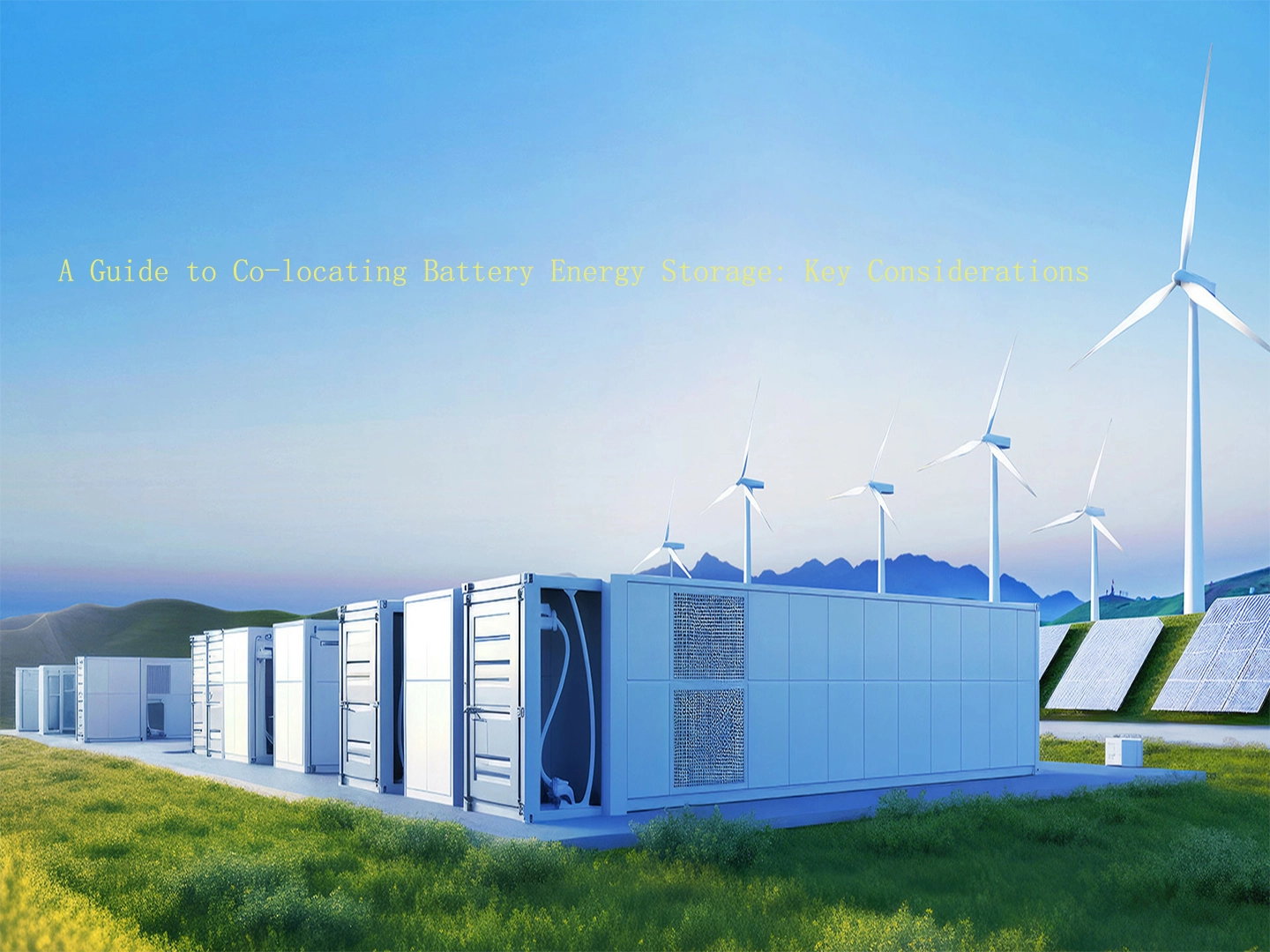
The Value Proposition of Co-located Battery Storage
Batteries for energy storage are neither secondary players nor shakers; they can herald a complete change of the game. In other words, some benefits of battery energy storage that it offers when paired with energy generation assets are:
Energy optimization: it stores electricity when electricity is cheap and uses it when electricity is expensive.
Grid services: it provides frequency regulation and voltage support and can also be used as a form of emergency power.
Increase earnings: participate in the demand response program, capacity market, and ancillary services, which are all income paths.
Reduce wastage: make intermittent electricity more real and more profitable.
Improve reliability: it can help stabilize the power grid and reduce orderly dependency on fossil fuel power plants.
Key Considerations for Successful Co-location Projects
1. Permitting and Regulatory Compliance
Federal and Local Regulations: In terms of regulations for battery energy storage systems, these vary from one place to another, and developers have to barter with fire departments, utility companies, and various local municipalities at the very start of the project consideration phase. Permit issues alone can mean millions of dollars worth of cost and, in some cases, lead to cancellation.
Community Outreach: If resistance does set in, it is sometimes a matter of erroneous beliefs regarding safety and this may delay or sometimes hinder the project completely. Predictive communication that would give them an exact idea of the fire hazards, economic benefits, and environmental considerations would help build confidence.
Land Use and Zoning: Review any zoning regulations with regard to building setbacks, fire escapes, and land use categories. Early conversations with local planning agencies are always best to prevent last-minute redesigns.
2. Grid Interconnection
Allowing Timeline: Grid interconnection does not happen in a day's time and sometimes, even in years. In some places like New York ISO, which is quite a congested area, 7.4 years is required. Having a plan thus can be helpful, more so with a flexible site.
Needs of Research: There will be system impact studies and possibly grid upgrades. Installed behind the meter, software programs are likely to go faster but they still must be synchronized with the electric utility.
Safety and Risk Mitigation
1. Fire safety and thermal management
To prevent battery fires, thermal management and sophisticated cooling systems are particularly crucial. Solutions that are trending nowadays include:
Liquid cooling: Use water or other fluids to remove heat.
Exhaust gas detection: Timely detect the gas produced by the battery to prevent the problem from spreading.
Container battery system: Put the battery in a special container, which is safer.
2. Fulfill safety standards
Some of the key industry standards to adhere to are:
NFPA 855: This is the standard for the installation of stationary energy storage systems.
UL 9540/9540A: This is the system safety test specification.
It is only by adhering to these standards that you can navigate the approval process more easily and more safely.
3. Emergency plan
Coordinate closely with local fire departments and emergency response teams. You can leverage tools like the American Clean Power Association (ACP) Firefighter Checklist to put emergency procedures in place in advance.
Maintenance strategy and long-term performance
Predictive maintenance and monitoring
There are now sophisticated artificial intelligence monitoring systems that have the capability to detect battery performance problems or aging in advance. This allows operators to take action in advance to prevent equipment downtime.
Lifecycle management
Batteries will age over time. A five- to ten-year upgrade plan is ideal to replace aging batteries or add capacity on a regular basis to keep the system in good operating condition.
Spare parts and technician training
Establish a stable supply chain so that you can procure the required spare parts in time. In the meantime, invest in technician training to make them more familiar with the equipment so that the repairs are faster and operations more streamlined.
Future-proofing Your Battery Investment
1. Scalability and modular design
Leave room for future changes when designing. Modular BESS can be upgraded and grown at any time without a massive change in current infrastructure.
2. Evolve with new technologies
Keep an eye on new technologies, such as long-duration energy storage or solid-state batteries. Lithium-ion batteries are currently the standard, but future batteries could undergo additional cost, safety and performance improvements.
3. Smart system integration
Combining battery energy storage systems (BESS) with smart energy management systems, microgrids, demand response, etc. not only can improve flexibility but also can generate multiple values from one device.
Invest in the future of smart energy
Battery energy storage systems are the pillars of modern renewable energy strategies. When properly planned, they can have a remarkable impact on performance, resilience, and flexibility. The developers need to do extensive background studies on regulatory policies, design expandable systems in the long run, and adopt cutting-edge technologies to remain competitive in the current changing energy landscape.