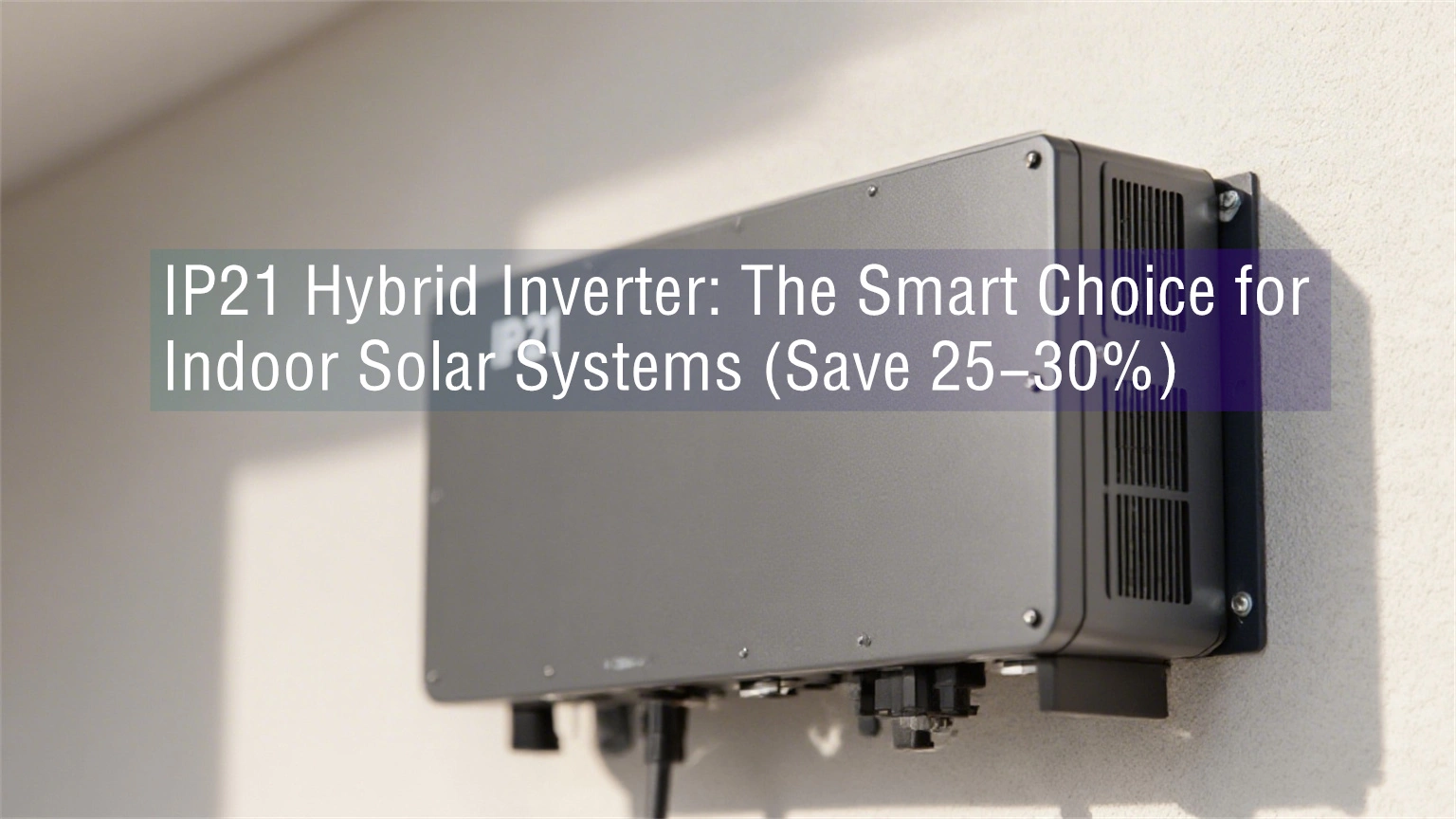
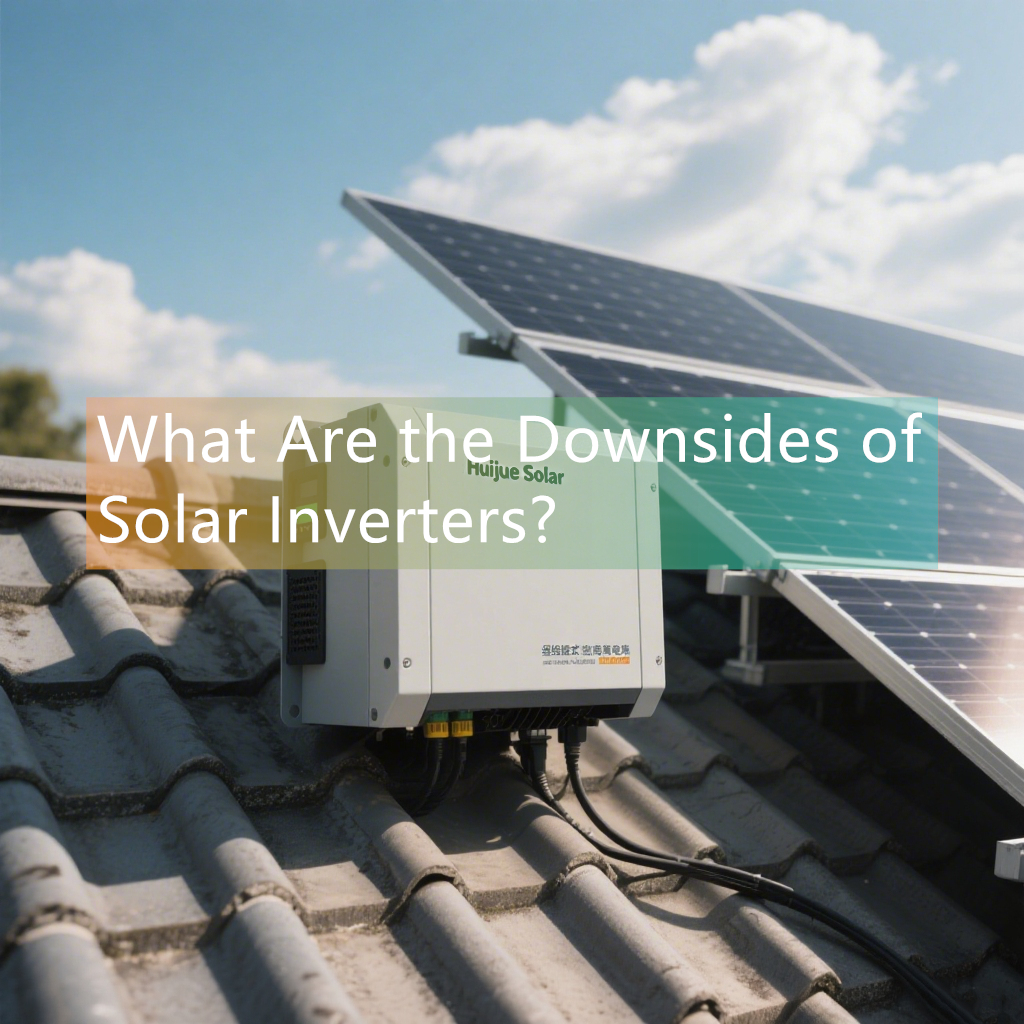
Solar inverters are the "brains" of PV systems, converting the DC power generated by solar panels into usable AC power. But they also have some obvious technical and economic issues that may affect system performance, safety, and return on investment. Whether it is a system designer or an ordinary owner, it is critical to understand these limitations. Here are the 7 major disadvantages that the industry is working to solve:
1. Harmonic distortion and power quality issues
Inverters are the main source of harmonic pollution in PV systems. The high-speed switching of internal power electronic components (such as IGBTs) generates high-frequency noise and waveform distortion. In large installation scenarios, when multiple inverters work in parallel, their respective harmonic currents will be superimposed, which may cause grid waveform distortion and even exceed the limits of industry standards (such as IEEE 519). The specific manifestations are:
- Voltage fluctuation and flicker: Sudden changes in light such as cloud cover will cause the inverter output power to change suddenly, which may cause light flickering or failure of precision electronic equipment;
- Transformer overheating: Harmonic current will increase the loss of iron core and copper wire;
- Damage to capacitor bank: Harmonic resonance will bring additional pressure to components;
- Neutral line overload: 3rd, 9th and other harmonics will be superimposed on the neutral line.
Solution: Today's high-end inverters (such as the CET iMeter series) have built-in active harmonic filters, which can control the total harmonic distortion (THD) to less than 3% through real-time monitoring and adaptive suppression algorithms.
2. High initial investment cost
Hybrid inverters (taking into account both grid connection and battery backup) are 25%-40% higher in price than ordinary string inverters or micro inverters. A 10kW hybrid inverter usually costs $3,000-4,500, while the same level of string inverters only costs $1,800-2,500. Micro inverters (such as LG models) are more expensive, often twice as much as string inverters - this is because they can optimize the power of each panel individually and have a redundant design.
The main reasons for the high cost are:
- High-end components: silicon carbide (SiC) MOSFET, high-speed digital signal processor (DSP);
- Redundant circuits: independent AC-DC conversion modules;
- Certification costs: need to pass UL 1741 SA, IEC 62109 and other standards certification.
3. Complex installation and maintenance
The installation of household battery-inverter systems (especially 85-600V high-voltage architectures) is not as "plug-and-play" as ordinary household appliances. It requires:
- Customized cables: There is no unified standard for the connection cables from batteries to inverters, and they often need to be made on site, which is time-consuming and error-prone;
- Battery string matching: Mixing battery modules from different production batches will accelerate aging due to capacity mismatch - the "barrel effect" will limit the capacity of the entire battery pack to the weakest one;
- Professional debugging: When multiple inverters are in parallel, a grid simulator and power analyzer are required to synchronize the phases.
| Challenges | Low voltage system (40-60V) | High voltage system (85-600V) |
|---|---|---|
| Equipment | Bulky inverter + parallel battery | Series battery pack + high voltage controller |
| Wiring | Non-standard, requires on-site assembly | Prefabricated wire but sensitive to batches |
| Capacity loss | Current imbalance due to resistance difference | Voltage imbalance due to capacity decay |
| Maintenance | Manual balancing every 6-12 months | SOC calibration + replacement of aging modules |
4. Battery compatibility and aging issues
Not all inverters can be "plug and play" with batteries. Off-grid and hybrid inverters need to accurately match the battery pack voltage - for example, a 48V lithium iron phosphate battery requires the inverter to support a DC input range of 40-60V. The main problems include:
- Accelerated aging: When new and old batteries are connected in parallel, the low-impedance battery will "grab the current", causing overheating and premature damage;
- Deep charge and discharge limit: Off-grid inverters usually allow the battery to be deeply discharged (>50%) every day, which will shorten the life to about 5 years, while the battery life of the grid-connected system can reach more than 10 years;
- Charging adaptation problem: Mismatched charging curves (such as mixed use of lead-acid batteries and lithium batteries) will reduce efficiency.
Solution: Today's hybrid inverters (such as the Anenji brand) have built-in adaptive battery management systems (BMS), which can automatically identify battery types and optimize charging methods.
5. Grid instability and islanding effect risks
When the grid is out of power, if the inverter does not detect the "islanding effect" (the photovoltaic system still supplies power to local loads after the grid is out of power), it may cause grid instability. The main risks are:
- Grid-connected shock: When the grid resumes power supply, the inverter and the mains phase are inconsistent, which will generate destructive surge current;
- Safety hazards: Line maintenance personnel may be electrocuted due to accidental power supply.
Solution: Island protection devices (such as CET PMC-751X-G) can detect grid faults through frequency deviation or impedance measurement within 100-300 milliseconds and force the inverter to shut down.
6. Partial shading or mismatch leads to reduced efficiency
The efficiency of centralized and string inverters will be greatly reduced when the performance of the components is degraded (such as shading, dust accumulation, and component aging). As long as one panel in the string is blocked, the output of the entire string may drop by 15%-20%. Even advanced maximum power point tracking (MPPT) algorithms have difficulty coping with:
- Low voltage operation: Traditional DC-DC converters cannot increase voltages below 150V to levels that meet grid requirements;
- Single-stage conversion: High-power 60kW string inverters sacrifice the voltage adaptability range of MPPT in order to control costs.
Solution: Distributed architectures such as microinverters or DC optimizers can perform MPPT control on each panel individually, retaining about 99% of potential power generation even when component performance is inconsistent.
7. Volume, weight and heat dissipation limitations
High-power inverters (>60kW) face the following problems in large-scale applications:
- Bulky casing: Copper magnetic components and heat sinks make the equipment weigh more than 100 kg, increasing the difficulty of rooftop installation;
- High temperature derating: When the ambient temperature exceeds 40°C, the inverter output power may decrease by 10%-25%;
- Single unit capacity limitation: Although there are 3.2MW centralized inverter products, once a failure occurs, about 3200kWh of power generation may be lost per hour - so models around 500kW are a practical choice that takes into account both risk and efficiency.
Improvement direction: How to alleviate the limitations of inverters?
- Wider MPPT voltage range: Negative embedded Z-source inverters (NEZSI) can start below 100V and can use the energy of low-voltage strings;
- Hybrid architecture: String inverters are paired with power optimizers to balance cost and anti-shading capabilities;
- Grid-building capabilities: The new generation of inverters can autonomously adjust voltage and frequency, supporting 72% of grid independent operation;
- Modular batteries: Systems such as Tesla Powerwall 3 integrate inverters and batteries to support plug-and-play wiring.
Through active design (such as using island protection devices, adaptive BMS, harmonic filters), these limitations can be transformed into controllable trade-offs. As the industry moves towards silicon carbide (SiC) designs and standardized communication protocols (such as IEEE 2030.5), inverters will be upgraded from simple converters to important assets for grid stability.
Key conclusion:
Inverter shortcomings are not "fatal problems" but factors that need to be considered during design. Choosing an integrator that focuses on compatibility testing, harmonic analysis, and full life cycle maintenance can make your investment more future-oriented.